2026
The Influence of Ribose on Borate Mineral Solubility
The Influence of Ribose on Borate Mineral Solubility
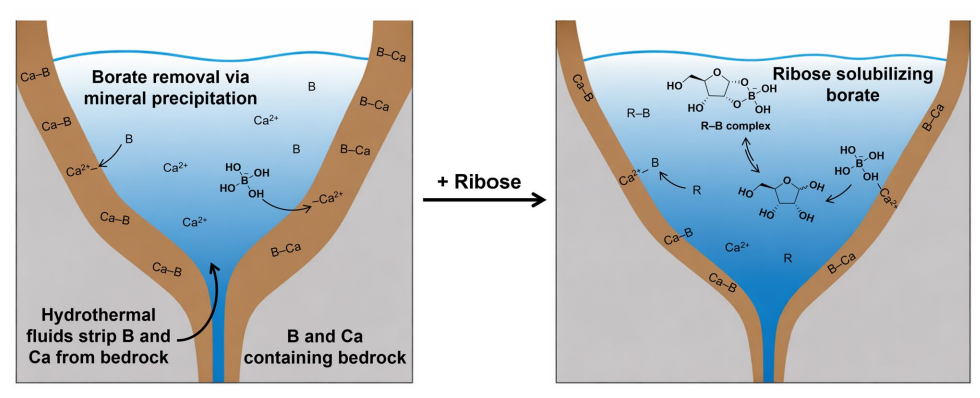
The prebiotic synthesis of ribose is thought to have played a key role in origin-of-life scenarios based on the RNA world hypothesis. As ribose is readily prone to decomposition, ribose-borate complexes, which are resistant to degradation under alkaline conditions, are often suggested to have protected ribose on early Earth. Prebiotic laboratory experiments exploring ribose-borate complexes, however, generally use high borate concentrations sourced from synthetic reagents that do not reflect the lower solubility of calcium-bearing borate minerals and the limited aqueous borate found in modern geological settings. Here, we describe how the presence of aqueous ribose can significantly increase the solubility of a range of borate-bearing minerals, even the characteristically less soluble calcium-containing borates. Furthermore, it is demonstrated that ribose-borate complexes prevent borate from calcium-induced precipitation, inhibiting its removal from solution and ensuring it remains chemically available for further downstream aqueous reactions. These findings will aid future prebiotic experiments in reflecting more geologically realistic conditions in the context of the RNA world hypothesis and also provide insight into the impact that prebiotic organo-mineralization may have played on geochemical systems on the early Earth.
NMR Spectroscopy of Ribose–Borate Complexes Revisited
NMR Spectroscopy of Ribose–Borate Complexes Revisited
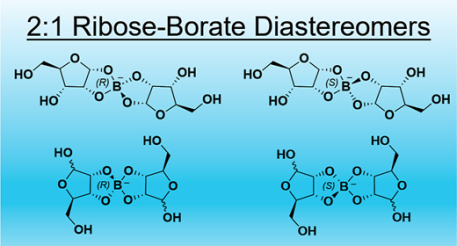
Ribose–borate complexes play an important role in prebiotic chemistry, yet detailed, systematic structural characterization by NMR spectroscopy particularly of the 2:1 complexes has remained limited. The most widely cited study dates to 1988 by Chapelle and Verchere relying on 80 and 90 MHz magnets. Herein, we present updated structural characterization of ribose–borate complexes using one- and two-dimensional 1H and 13C NMR spectroscopy (performed with a 600 MHz instrument), including assignment of proton and carbon resonances via 1H–1H COSY and 1H–13C HSQC experiments. These assignments were corroborated and supported by density functional theory predictions of NMR chemical shifts. It is demonstrated that the homogeneous 2:1 complexes exist as diastereomeric pairs arising from R and S configurations at the spiro-boron center. In addition, 13C NMR spectroscopy suggests the presence of other heterogeneous 2:1 complexes that have not previously been reported or discussed. These results provide a more comprehensive reference for ribose–borate speciation, supporting future studies particularly in prebiotic chemistry.
Transmembrane pH Gradients Afforded Autocatalytically by a Lumenal Formaldehyde-Sulfite Clock Reaction
Transmembrane pH Gradients Afforded Autocatalytically by a Lumenal Formaldehyde-Sulfite Clock Reaction
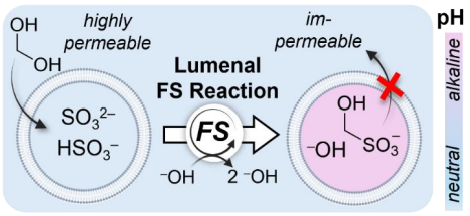
Proton gradients across membranes are central to modern bioenergetics and are thought to have played a pivotal role in life’s emergence. We report that the autocatalytic formaldehyde-sulfite (FS) pH-clock reaction can generate such gradients when encapsulated in unilamellar phospholipid vesicles. POPC/POPG vesicles (~100 nm) containing sodium (bi)sulfite and the fluorescent pH probe HPTS were prepared by the thin-film hydration method, extruded and purified via size exclusion chromatography. Upon aqueous formaldehyde addition, a rapid rise in lumen pH was observed, resulting in a transmembrane pH gradient whose magnitude and kinetics were sensitive to initial lumen pH. Vesicles with lumen pH near 7.5 exhibited an increase to ~8.8 followed by a gradual decrease toward neutrality. 13C NMR spectroscopy confirmed encapsulation of the final FS product, hydroxymethanesulfonate. Vesicles doped with small percentages of oleic acid afforded faster proton transport, demonstrating the spike in pH can be controlled through membrane composition. These findings establish a simple, nonenzymatic route to transmembrane pH gradients and provide a rare experimental example of an autocatalytic reaction network confined within protocell-like vesicles.
Hydrogen peroxide on Mars and icy moons: Implications for the search for extraterrestrial signatures of prebiotic chemistry
Hydrogen peroxide on Mars and icy moons: Implications for the search for extraterrestrial signatures of prebiotic chemistry
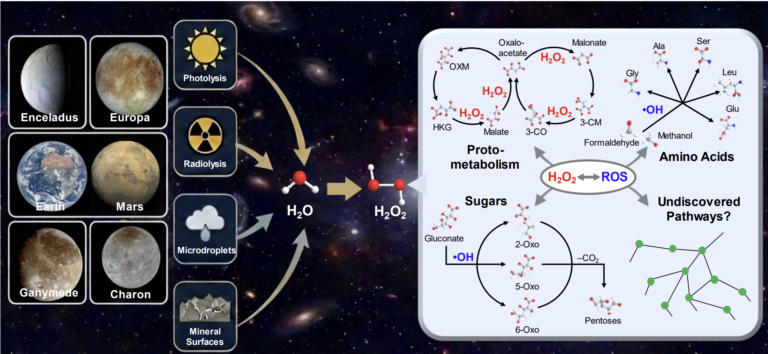
Hydrogen peroxide (H2O2) is increasingly recognized as an important molecule in prebiotic chemistry that potentially had a large impact on life’s early evolution. We highlight recent examples of H2O2 in prebiotic syntheses that model potential protometabolic reactions. Recent discoveries have revealed multiple abiotic production mechanisms for H2O2, suggesting its prevalence in prebiotic and extraterrestrial environments, an idea that is supported by the detection of H2O2 in the Martian atmosphere and on the surfaces of icy moons. Given that Earth’s active geological processes have erased records of the earliest prebiotic chemical processes, we hypothesize that extraterrestrial environments that produce H2O2 such as Mars and icy moons may still have similar types of chemistry occurring, and the discovery of such reactions by advanced space missions would offer invaluable insights into prebiotic chemistry. To test our hypothesis, experimental and theoretical studies aimed at modeling prebiotic chemistry in these H2O2-producing environments are required. We propose the general principle of “Where There is Water, There is H2O2” as an astrobiology guideline that supplements and refines the traditional “Follow the Water” approach used to plan space missions.
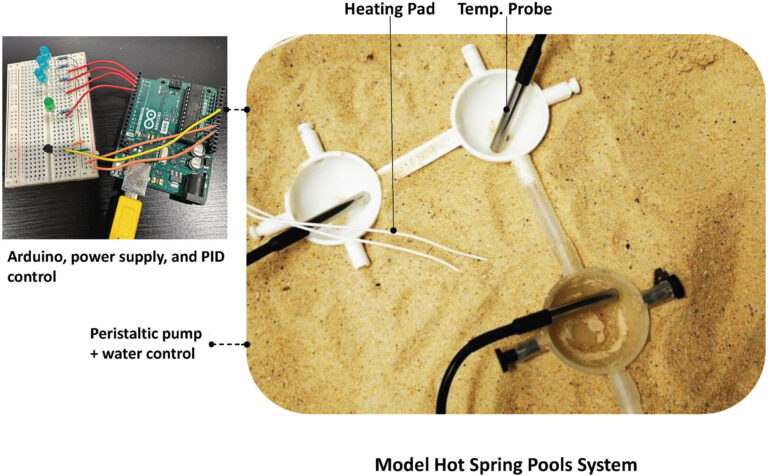
A Modular 3D-Printed Design to Investigate Prebiotic Chemical Systems in Hot Spring Pools
A Modular 3D-Printed Design to Investigate Prebiotic Chemical Systems in Hot Spring Pools
The emergence of protocells, membranous compartments with encapsulated genetic material, was a crucial step in life’s origin and evolution. The hot spring hypothesis for the origin of life suggests that protocells with the capacity to encapsulate organic matter could have formed in hot spring pools during wet–dry (WD) cycling of hydrothermal fluids. Previous investigations have focused on mimicking WD cycles within a single pool, which precludes simulation of many hydrothermal field conditions, such as different mineralogies and variable temperature, pH, and water flow within and between multiple hot spring pools. Here, we present a modular 3D-printed hydrothermal field simulator that mimics many more aspects of the complex nature of hot spring fields by controlling the temperature, pH, and mineralogical variability of a series of linked pools. Furthermore, the pools can be programmed to experience fluid mixing between proximal pools and periodic WD cycling events. Results with the prototype hot spring field design demonstrate the ability to spontaneously form lipid vesicles that encapsulate organic matter within membranous compartments comprised of decanoic acid:decanol (4:1) or the phospholipids POPC:POPG (1:1). We observed that the vesicles formed during multiple WD cycles in the simulator pools displayed variation in their size distribution and differences in the number of membrane layers. Cargo encapsulation was favored in giant unilamellar vesicles and oligolamellar vesicles. Overall, the hot spring simulator offers a novel and customizable approach for studying multiple processes within hydrothermal field dynamics that include prebiotic chemical reactions, mineral surface catalysis, and the complexities of fluid mixing between proximal hot spring pools.
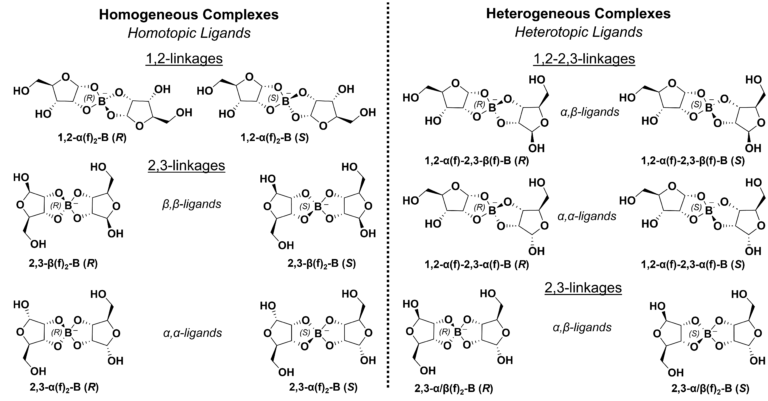
NMR Spectroscopy of Ribose-Borate Complexes Revisited
NMR Spectroscopy of Ribose-Borate Complexes Revisited
Ribose-borate complexes play an important role in prebiotic chemistry, yet detailed, systematic structural characterization by NMR spectroscopy particularly of the 2:1 complexes has remained limited. The most widely cited study dates to 1988 by Chapelle and Verchere relying on 80 and 90 MHz magnets. Herein, we present updated structural characterization of ribose-borate complexes using one-and two-dimensional 1H and 13C NMR spectroscopy (performed with a 600 MHz instrument), including assignment of proton and carbon resonances via 1H-1H COSY and 1H-13C HSQC experiments. These assignments were corroborated and supported by density functional theory predictions of NMR chemical shifts. It is demonstrated that the homogeneous 2:1 complexes exist as diastereomeric pairs arising from R and S configurations at the spiro-boron center. In addition, 13C NMR spectroscopy indicates the presence of other heterogeneous 2:1 complexes that have not previously been reported or discussed. These results provide a more comprehensive reference for ribose-borate speciation, supporting future studies particularly in prebiotic chemistry.
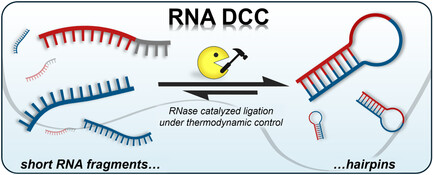
RNA Hairpin Synthesis by RNase‐Catalyzed Dynamic Covalent Chemistry
RNA Hairpin Synthesis by RNase‐Catalyzed Dynamic Covalent Chemistry
Dynamic covalent chemistry (DCC) provides a powerful framework for assembling complex molecular architectures under thermodynamic control. Here, we extend RNA DCC by harnessing the ability of RNase T1—traditionally used as a degradative enzyme—to catalyze reversible phosphodiester exchange. Although enzyme-mediated RNA ligation has been reported previously, such reactions typically required high substrate concentrations and yielded heterogeneous mixtures without structural control. By coupling catalysis to RNA folding, selective formation of well-defined hairpin products governed by thermodynamic stability was achieved. PAGE, LC-MS, and NMR analyses confirm high-fidelity ligation at low temperatures with yields up to 61%, directed by loop stability and stem complementarity. Four distinct RNA oligomers assemble into two hairpins in one pot without cross-ligation, demonstrating RNA DCC as a programmable strategy for equilibrium RNA assembly. This work outlines an RNase-catalyzed framework for structure-guided RNA recombination, showcasing an underexplored pathway for the ligation of folded RNA polymers.

Astrobiology and the People Who Study It: Stories of Science and Self
Astrobiology and the People Who Study It: Stories of Science and Self
A personal account of what its like to do astrobiology research in Australia.
2025
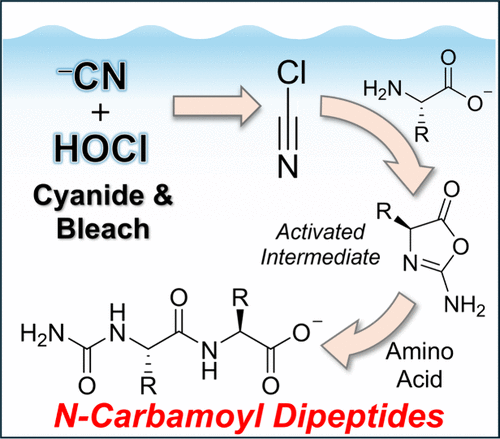
Rapid Activation of Amino Acids with Cyanide and Hypochlorite
Rapid Activation of Amino Acids with Cyanide and Hypochlorite
Cyanogen chloride (NCCl) produced from the reaction of –CN with HOCl has previously been shown to afford activation of ribonucleotides. We now report that NCCl reacts with primary aliphatic amino acids to rapidly produce N-carbamoyl dipeptides in excellent yields (89–98%). Studies with l-alanine suggest that racemization of the amino acids does not occur significantly during the reaction. Quantum chemical (DFT) calculations predict that the mechanism proceeds via activated 2-amino-5(4H)-oxazolone intermediates, which undergo amino acid nucleophilic attack. NCCl can also be generated in situ from glycine and HOCl, enabling the “sacrificial activation” of glycine to form N-carbamoyl diglycine. At 70 °C, selective peptide bond hydrolysis yields N-carbamoyl glycine, which is a known peptide precursor. The findings herein build upon prior work involving NCCl in prebiotic ribonucleotide synthesis and activation, highlighting its potential as a general chemical activator for the prebiotic condensation of life’s molecular building blocks.
2024

Iron sulfide-catalyzed gaseous CO2 reduction and prebiotic carbon fixation in terrestrial hot springs
Iron sulfide-catalyzed gaseous CO2 reduction and prebiotic carbon fixation in terrestrial hot springs
Understanding abiotic carbon fixation provides insights into early Earth’s carbon cycles and life’s emergence in terrestrial hot springs, where iron sulfide (FeS), similar to cofactors in metabolic enzymes, may catalyze prebiotic synthesis. However, the role of FeS-mediated carbon fixation in such conditions remains underexplored. Here, we investigate the catalytic behaviors of FeS (pure and doped with Ti, Ni, Mn, and Co), which are capable of H2-driven CO2 reduction to methanol under simulated hot spring vapor-zone conditions, using an anaerobic flow chamber connected to a gas chromatograph. Specifically, Mn-doped FeS increases methanol production five-fold at 120 °C, with UV−visible light (300–720 nm) and UV-enhanced light (200–600 nm) further increasing this activity. Operando and theoretical investigations indicate the mechanism involves a reverse water-gas shift with CO as an intermediate. These findings highlight the potential of FeS-catalyzed carbon fixation in early Earth’s terrestrial hot springs, effective with or without UV light.
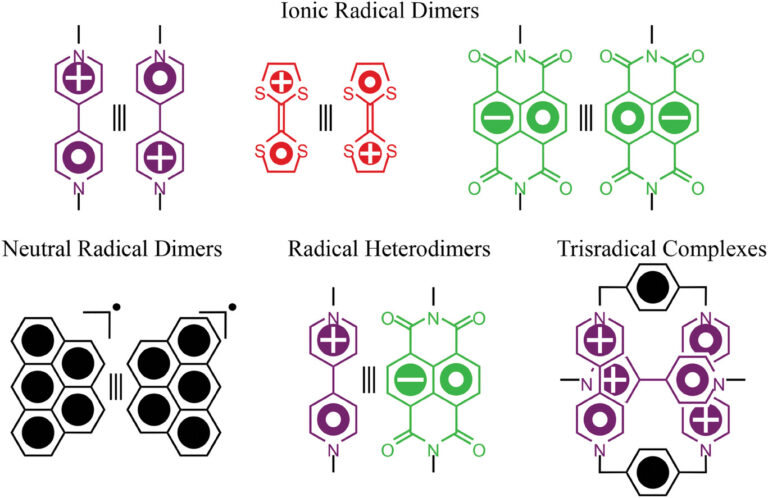
Harnessing Radicals: Advances in Self‐Assembly and Molecular Machinery
Harnessing Radicals: Advances in Self‐Assembly and Molecular Machinery
Radicals, with their unpaired electrons, exhibit unique chemical and physical properties that have long intrigued chemists. Despite early skepticism about their stability, the discovery of persistent radicals has opened new possibilities for molecular interactions. This review examines the mechanisms and applications of radically driven self-assembly, focusing on key motifs such as naphthalene diimides, tetrathiafulvalenes, and viologens, which serve as models for radical assembly. The potential of radical interactions in the development of artificial molecular machines (AMMs) are also discussed. These AMMs, powered by radical-radical interactions, represent significant advancements in non-equilibrium chemistry, mimicking the functionalities of biological systems. From molecular switches to ratchets and pumps, the versatility and unique properties of radically powered AMMs are highlighted. Additionally, the applications of radical assembly in materials science are explored, particularly in creating smart materials with redox-responsive properties. The review concludes by comparing AMMs to biological molecular machines, offering insights into future directions. This overview underscores the impact of radical chemistry on molecular assembly and its promising applications in both synthetic and biological systems.
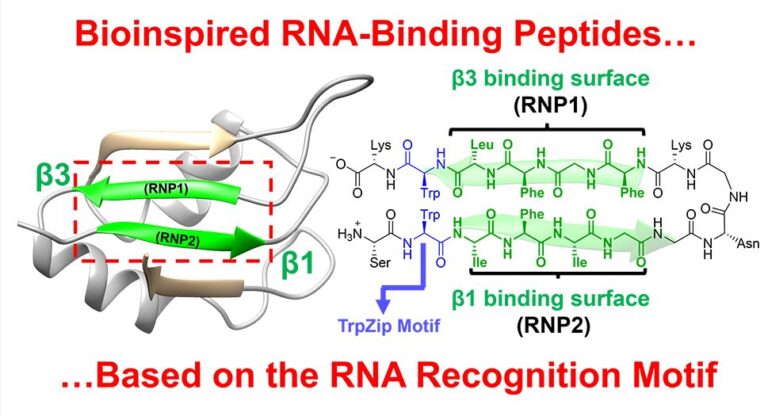
RNA-Binding Peptides Inspired by the RNA Recognition Motif
RNA-Binding Peptides Inspired by the RNA Recognition Motif
β-Hairpin peptides with RNA-binding sequences mimicking the central two β-strands of the RNA recognition motif (RRM) protein domain have been observed to bind in a 2:1 fashion to a series of RNA homooligonucleotides in aqueous solution (PBS buffer, pH 7.40) with binding energies (−27 to −35 kJ mol–1) similar to those of full-size protein RRMs. The peptides display mild selectivities with respect to the binding of the different homooligomers. Binding studies in 500 mM magnesium chloride suggest that the complex formation is not predominantly driven by Coulombic attraction. These peptides represent a starting point for further studies of non-Coulombic binding of RNA by peptides and proteins, which is important in the context of contemporary biology, potential therapeutic applications, and prebiotic peptide–RNA interactions.
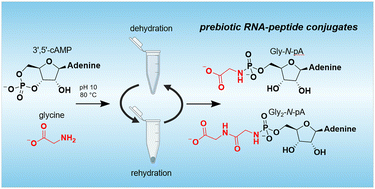
Dehydration promotes phosphoramidate-linked amino acidyl and peptido adenosine conjugates
Dehydration promotes phosphoramidate-linked amino acidyl and peptido adenosine conjugates
Cyclic nucleoside phosphates have been shown previously to be adequately activated to oligomerise under dry conditions. Herein, it is demonstrated that 3′,5′-cyclic adenosine monophosphate (3′,5′-cAMP) and glycine when subjected to dehydration under alkaline conditions form phosphoramidate-linked conjugates. Solid-state reaction mechanisms investigated by DFT suggest why the reaction does not occur efficiently in the aqueous phase.
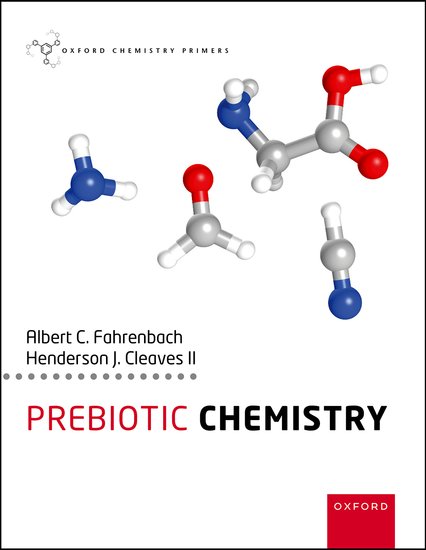
Prebiotic Chemistry
Prebiotic Chemistry
- The only prebiotic chemistry book with a chemical focus
- A student-friendly and engaging introduction
- Uses a range of examples to convey basic concepts in prebiotic chemistry
- Examines chemical phenomena that have been classified by chemists in different ways over the last 150 years
2023
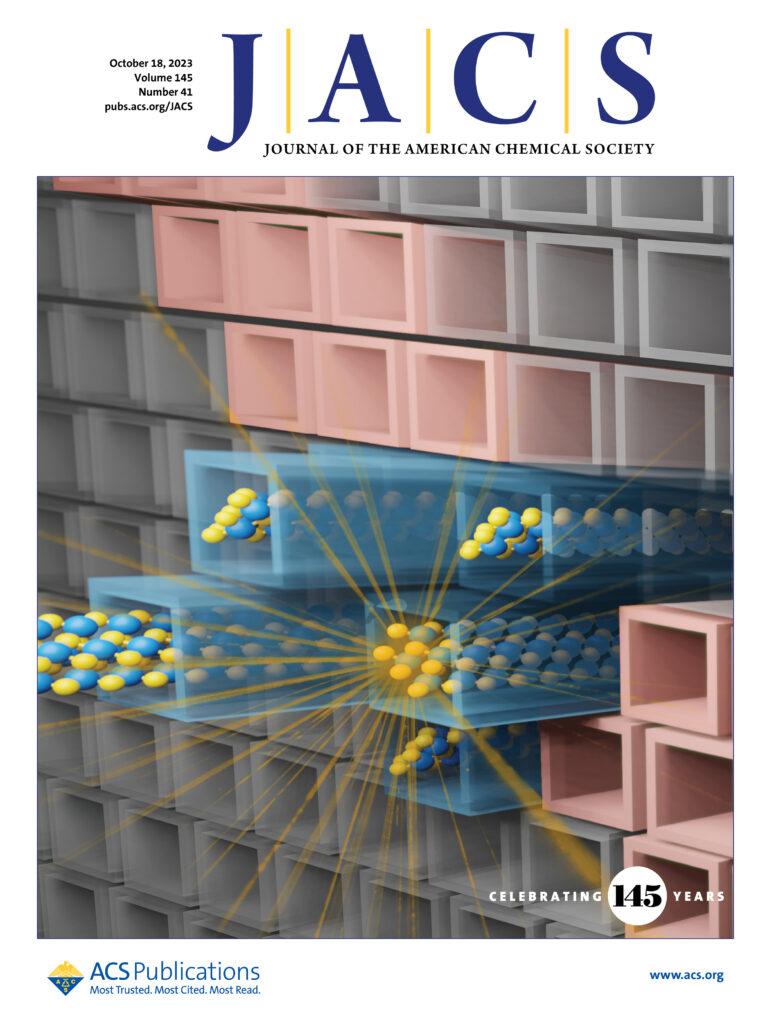
Assessment of Stoichiometric Autocatalysis across Element Groups (Got the cover for the issue!)
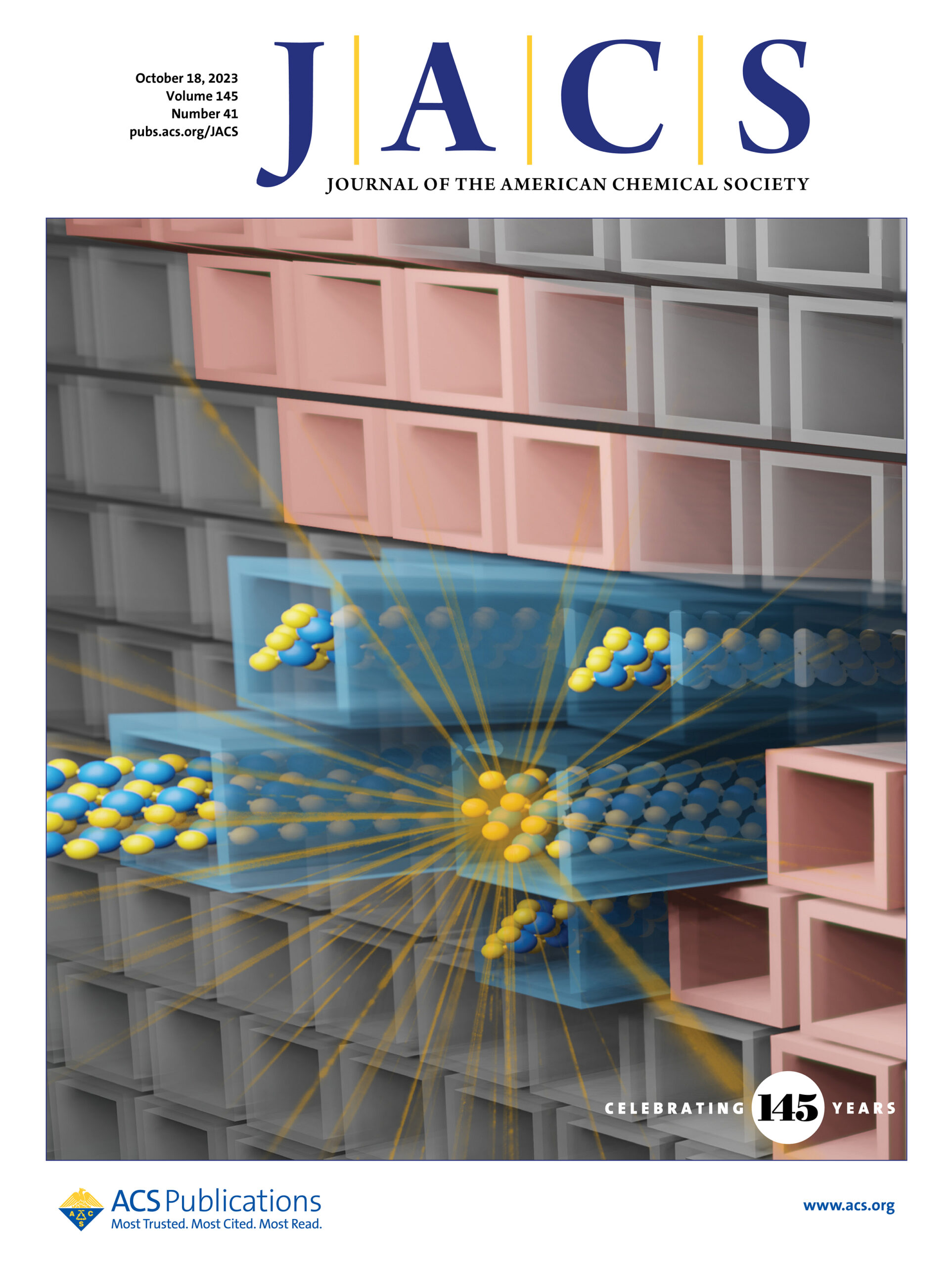
Assessment of Stoichiometric Autocatalysis across Element Groups (Got the cover for the issue!)
Autocatalysis has been proposed to play critical roles during abiogenesis. These proposals are at odds with a limited number of known examples of abiotic (and, in particular, inorganic) autocatalytic systems that might reasonably function in a prebiotic environment. In this study, we broadly assess the occurrence of stoichiometries that can support autocatalytic chemical systems through comproportionation. If the product of a comproportionation reaction can be coupled with an auxiliary oxidation or reduction pathway that furnishes a reactant, then a Comproportionation-based Autocatalytic Cycle (CompAC) can exist. Using this strategy, we surveyed the literature published in the past two centuries for reactions that can be organized into CompACs that consume some chemical species as food to synthesize more autocatalysts. 226 CompACs and 44 Broad-sense CompACs were documented, and we found that each of the 18 groups, lanthanoid series, and actinoid series in the periodic table has at least two CompACs. Our findings demonstrate that stoichiometric relationships underpinning abiotic autocatalysis could broadly exist across a range of geochemical and cosmochemical conditions, some of which are substantially different from the modern Earth. Meanwhile, the observation of some autocatalytic systems requires effective spatial or temporal separation between the food chemicals while allowing comproportionation and auxiliary reactions to proceed, which may explain why naturally occurring autocatalytic systems are not frequently observed. The collated CompACs and the conditions in which they might plausibly support complex, “life-like” chemical dynamics can directly aid an expansive assessment of life’s origins and provide a compendium of alternative hypotheses concerning false-positive biosignatures.
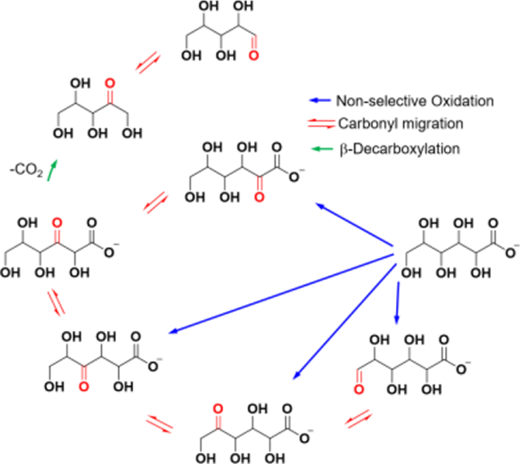
Carbonyl Migration in Uronates Affords a Potential Prebiotic Pathway for Pentose Production
Carbonyl Migration in Uronates Affords a Potential Prebiotic Pathway for Pentose Production
Carbohydrate biosynthesis is fundamental to modern terrestrial biochemistry, but how this collection of metabolic pathways originated remains an open question. Prebiotic sugar synthesis has focused primarily on the formose reaction and Kiliani–Fischer homologation; however, how they can transition to extant biochemical pathways has not been studied. Herein, a nonenzymatic pathway for pentose production with similar chemical transformations as those of the pentose phosphate pathway is demonstrated. Starting from a C6 aldonate, namely, gluconate, nonselective chemical oxidation yields a mixture of 2-oxo-, 4-oxo-, 5-oxo-, and 6-oxo-uronate regioisomers. Regardless at which carbinol the oxidation takes place, carbonyl migration enables β-decarboxylation to yield pentoses. In comparison, the pentose phosphate pathway selectively oxidizes 6-phosphogluconate to afford the 3-oxo-uronate derivative, which undergoes facile subsequent β-decarboxylation and carbonyl migration to afford ribose 5-phosphate. The similarities between these two pathways and the potential implications for prebiotic chemistry and protometabolism are discussed.
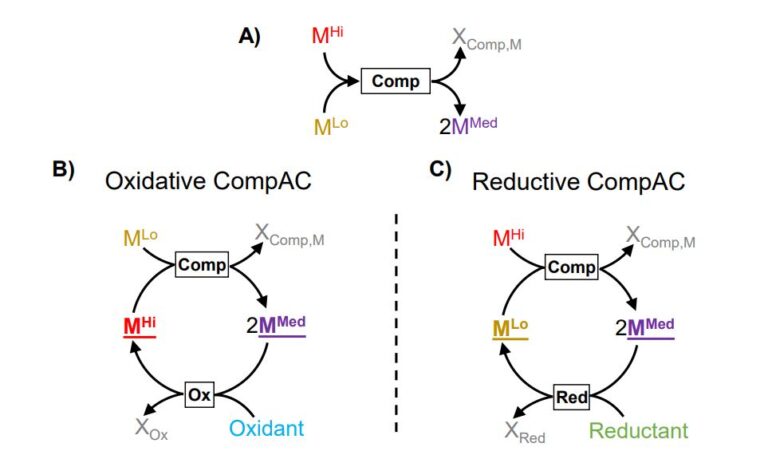
An assessment of stoichiometric autocatalysis across element groups
An assessment of stoichiometric autocatalysis across element groups
Autocatalytic chemical reaction systems have been proposed to play critical roles during the transition from an abiotic world to one that contains living systems. These proposals are at odds with a limited number of known examples of abiotic (and in particular, inorganic) autocatalytic systems that might reasonably function in a prebiotic environment. In this study, we broadly assess the occurrence of stoichiometries that can support autocatalytic chemical systems through comproportionation reactions. If the product of a comproportionation process can be coupled with an auxiliary oxidation or reduction pathway that furnishes a reactant, then a candidate comproportionation-based autocatalytic cycle (CompAC) structure can exist. Using this strategy, we surveyed the literature and chemical databases for reactions that can be organized into CompACs that consume some chemical species as food to synthesize more autocatalysts. 226 CompACs and 44 Broad-sense CompACs were documented, and it was found that each of the 18 groups, lanthanoid series, and actinoid series in the periodic table has at least two CompACs. Our findings demonstrate that stoichiometric relationships underpinning abiotic autocatalysis could broadly exist across a range of geochemical and cosmochemical conditions, some of which are substantially different from the modern Earth. At the same time, the observation of some autocatalytic systems requires effective spatial or temporal separation between the food chemicals while allowing comproportionation and auxiliary reactions to proceed, which may explain why naturally occurring autocatalytic systems are not frequently observed. The collated CompACs and the conditions in which they might plausibly support complex, “life-like” chemical dynamics, can directly aid an expansive assessment of life’s origins and provide a compendium of alternative hypotheses concerning false-positive biosignatures.
Exploring Artificial Nucleic Acid Mimicking Peptide Nanofibers
Exploring Artificial Nucleic Acid Mimicking Peptide Nanofibers
Nucleic acids play key roles in Nature, including storage of genetic information and translation into a wide variety of proteins that collectively build up cells. Their intrinsic programmability can be utilized to bind specific targets for a wide variety of biomedical applications. However, naturally derived nucleic acids are susceptible to degradation and their large-scale synthesis is costly. Although artificial polymeric nucleic acids show great promise, they are typically more flexible, and therefore their secondary structure is hard to control. Here, we designed polymerizable monomers that upon free-radical polymerization were able to form micrometer-long fibrous structures containing mononucleotide grafts. These fibers were a direct result of predesigned noncovalent interactions along the polymer backbone supported by the inclusion of peptide linkers installed between polymerizable headgroups and mononucleotides. The resulting hybrid nucleic acid-peptide homopolymers exhibited secondary structure signatures analogous to natural RNA but were unfolded and fibrous in morphology, in contrast to the collapsed globular structures typically observed for natural RNA in water. The peripheral exposed mononucleotides showed capacity to engage in complementary binding, albeit weak, to both one-dimensional (1D) and more complex three-dimensional (3D) nucleic acid structures, showing potential to be utilized as templates for biomedical applications.
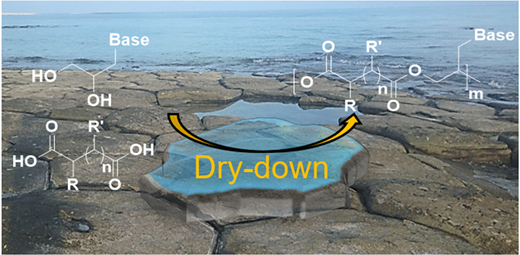
Alternating co-synthesis of glycol nucleic acid (GNA) monomers with dicarboxylic acids via drying
Alternating co-synthesis of glycol nucleic acid (GNA) monomers with dicarboxylic acids via drying
We report the co-polymerization of glycol nucleic acid (GNA) monomers with unsubstituted and substituted dicarboxylic acid linkers under plausible early Earth aqueous dry-down conditions. Both linear and branched co-polymers are produced. Mechanistic aspects of the reaction and potential roles of these polymers in prebiotic chemistry are discussed.
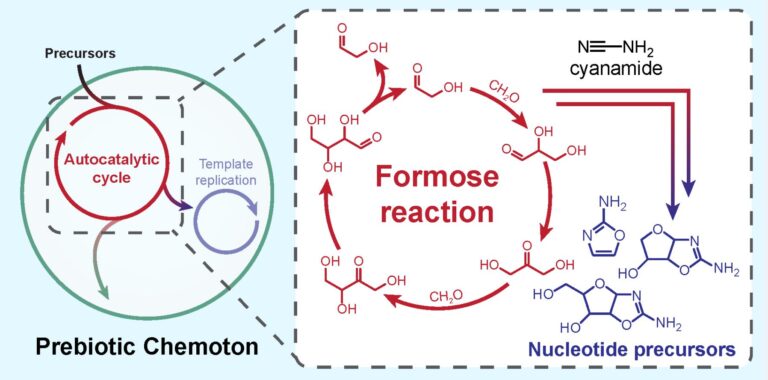
Towards a prebiotic chemoton – nucleotide precursor synthesis driven by the autocatalytic formose reaction
Towards a prebiotic chemoton – nucleotide precursor synthesis driven by the autocatalytic formose reaction
The formose reaction is often cited as a prebiotic source of sugars and remains one of the most plausible
forms of autocatalysis on the early Earth. Herein, we investigated how cyanamide and 2-aminooxazole,
molecules proposed to be present on early Earth and precursors for nonenzymatic ribonucleotide
synthesis, mediate the formose reaction using HPLC, LC-MS and 1
H NMR spectroscopy. Cyanamide was
shown to delay the exponential phase of the formose reaction by reacting with formose sugars to form
2-aminooxazole and 2-aminooxazolines thereby diverting some of these sugars from the autocatalytic
cycle, which nonetheless remains intact. Masses for tetrose and pentose aminooxazolines, precursors for
nucleotide synthesis including TNA and RNA, were also observed. The results of this work in the context
of the chemoton model are further discussed. Additionally, we highlight other prebiotically plausible
molecules that could have mediated the formose reaction and alternative prebiotic autocatalytic systems.
2022
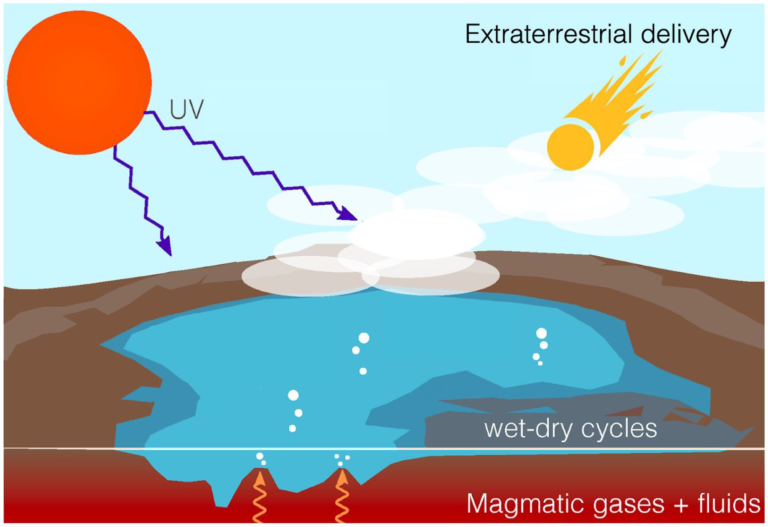
A Physicochemical Consideration of Prebiotic Microenvironments for Self-Assembly and Prebiotic Chemistry
A Physicochemical Consideration of Prebiotic Microenvironments for Self-Assembly and Prebiotic Chemistry
Abstract
The origin of life on Earth required myriads of chemical and physical processes. These include the formation of the planet and its geological structures, the formation of the first primitive chemicals, reaction, and assembly of these primitive chemicals to form more complex or functional products and assemblies, and finally the formation of the first cells (or protocells) on early Earth, which eventually evolved into modern cells. Each of these processes presumably occurred within specific prebiotic reaction environments, which could have been diverse in physical and chemical properties. While there are resources that describe prebiotically plausible environments or nutrient availability, here, we attempt to aggregate the literature for the various physicochemical properties of different prebiotic reaction microenvironments on early Earth. We introduce a handful of properties that can be quantified through physical or chemical techniques. The values for these physicochemical properties, if they are known, are then presented for each reaction environment, giving the reader a sense of the environmental variability of such properties. Such a resource may be useful for prebiotic chemists to understand the range of conditions in each reaction environment, or to select the medium most applicable for their targeted reaction of interest for exploratory studies.

Topic 2: Emergence of Life on Earth
Topic 2: Emergence of Life on Earth
Abstract not available.
2021
Radiolysis generates a complex organosynthetic chemical network
Radiolysis generates a complex organosynthetic chemical network
The architectural features of cellular life and its ecologies at larger scales are built upon foundational networks of reactions between molecules that avoid a collapse to equilibrium. The search for life’s origins is, in some respects, a search for biotic network attributes in abiotic chemical systems. Radiation chemistry has long been employed to model prebiotic reaction networks, and here we report network-level analyses carried out on a compiled database of radiolysis reactions, acquired by the scientific community over decades of research. The resulting network shows robust connections between abundant geochemical reservoirs and the production of carboxylic acids, amino acids, and ribonucleotide precursors—the chemistry of which is predominantly dependent on radicals. Moreover, the network exhibits the following measurable attributes associated with biological systems: (1) the species connectivity histogram exhibits a heterogeneous (heavy-tailed) distribution, (2) overlapping families of closed-loop cycles, and (3) a hierarchical arrangement of chemical species with a bottom-heavy energy-size spectrum. The latter attribute is implicated with stability and entropy production in complex systems, notably in ecology where it is known as a trophic pyramid. Radiolysis is implicated as a driver of abiotic chemical organization and could provide insights about the complex and perhaps radical-dependent mechanisms associated with life’s origins.
2020
Radiolytically Driven Chemical Evolution
Radiolytically Driven Chemical Evolution
Chemical evolution, starting from simple compounds that eventually transform into complex mixtures, is a theme long recognized to be of fundamental importance to origins of life research. Ionizing radiation on simple and small molecules, such as hydrogen cyanide (HCN) and acetonitorile (CH3CN), is proposed to be one of the geochemically plausible mechanism driving multiple reactions yielding prebiotic precursors essential to emergence of life on early-Earth. Water radiolysis forming radicals, proton, and solvated electron also assists developing a reaction network in a one-pot system. Radiolytic mechanisms on an experimental basis are reviewed. Particularly, proposed synthetic strategies and mechanisms of amino acids and nucleotides are presented.
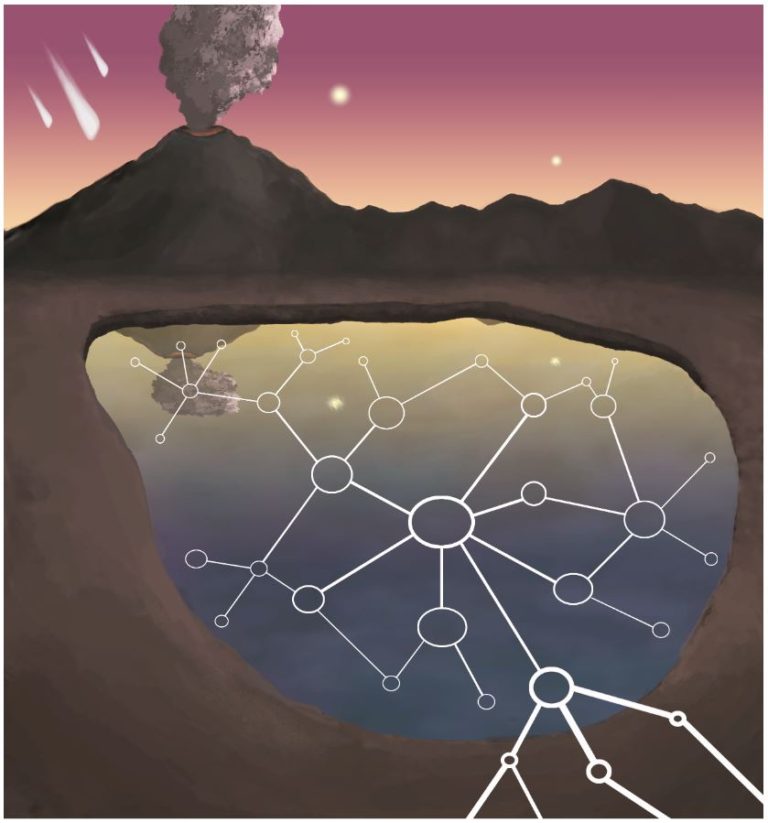
Prebiotic Reaction Networks in Water
Prebiotic Reaction Networks in Water
A prevailing strategy in origins of life studies is to explore how chemistry constrained by hypothetical prebiotic conditions could have led to molecules and system level processes proposed to be important for life’s beginnings. This strategy has yielded model prebiotic reaction networks that elucidate pathways by which relevant compounds can be generated, in some cases, autocatalytically. These prebiotic reaction networks provide a rich platform for further understanding and development of emergent “life-like” behaviours. In this review, recent advances in experimental and analytical procedures associated with classical prebiotic reaction networks, like formose and Miller-Urey, as well as more recent ones are highlighted. Instead of polymeric networks, i.e., those based on nucleic acids or peptides, the focus is on small molecules. The future of prebiotic chemistry lies in better understanding the genuine complexity that can result from reaction networks and the construction of a centralised database of reactions useful for predicting potential network evolution is emphasised.
Radicals in prebiotic chemistry
Radicals in prebiotic chemistry
Abstract not available.
Prebiotic Metabolism Gets a Boost
Prebiotic Metabolism Gets a Boost
It’s generally assumed that primitive forms of cellular life arose from nucleic acids and peptides compartmentalized within vesicles — all underpinned by a non-enzymatic protometabolism. Three studies now provide new insights into the ancient chemistry that may have supported early biology.
Self‐Assembly in Water with N‐Substituted Imines
Self‐Assembly in Water with N‐Substituted Imines
Imine synthesis has enjoyed a long history as the dynamic covalent reaction of choice for the construction of purely covalent molecular architectures. In organic solvents, the formation of imine bonds is reversible but leads to thermodynamically stable products. In the presence of water, however, imine bonds are labile, a fact which limits their utility as mediators of self-assembly in aqueous and biological media. In this Review, we discuss water-compatible dynamic covalent bonds based on N-substituted imine derivatives, namely hydrazones and oximes, for the self-assembly of metal-free organic architectures with well-defined structures. The reasons why hydrazones and oximes are more robust in water than their parent imines are explained. Recent progress in the self-assembly, characterization, and design principles of a variety of complex molecules including macrocycles, cages, catenanes, and knots in aqueous media is highlighted. Emerging applications for these molecules, including guest recognition and separations, are also discussed.
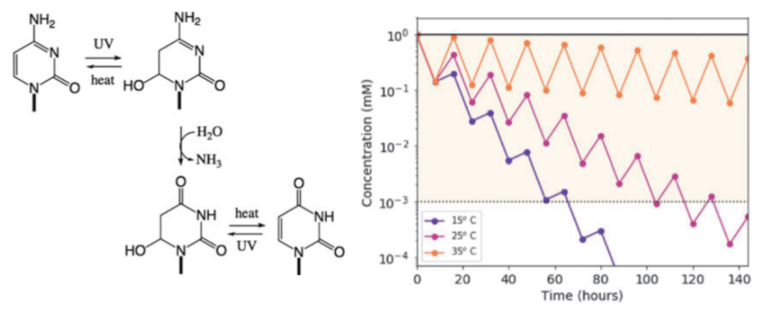
Ultraviolet-Driven Deamination of Cytidine Ribonucleotides Under Planetary Conditions
Ultraviolet-Driven Deamination of Cytidine Ribonucleotides Under Planetary Conditions
A previously proposed synthesis of pyrimidine ribonucleotides makes use of ultraviolet (UV) light to convert β-d-ribocytidine-2′,3′-cyclic phosphate to β-d-ribouridine-2′,3′-cyclic phosphate, while simultaneously selectively degrading synthetic byproducts. Past studies of the photochemical reactions of pyrimidines have employed mercury arc lamps, characterized by narrowband emission centered at 254 nm, which is not representative of the UV environment of the early Earth. To further assess this process under more realistic circumstances, we investigated the wavelength dependence of the UV-driven conversion of β-d-ribocytidine-2′,3′-cyclic phosphate to β-d-ribouridine-2′,3′-cyclic phosphate. We used constraints provided by planetary environments to assess the implications for pyrimidine nucleotides on the early Earth. We found that the wavelengths of light (255–285 nm) that most efficiently drive the deamination of β-d-ribocytidine-2′,3′-cyclic phosphate to β-d-ribouridine-2′,3′-cyclic phosphate are accessible on planetary surfaces such as those of the Hadean-Archaean Earth for CO2-N2-dominated atmospheres. However, continued irradiation could eventually lead to low levels of ribocytidine in a low-temperature, highly irradiated environment, if production rates are slow.
A continuous reaction network that produces RNA precursors
A continuous reaction network that produces RNA precursors
Continuous reaction networks, which do not rely on purification or timely additions of reagents, serve as models for chemical evolution and have been demonstrated for compounds thought to have played important roles for the origins of life such as amino acids, hydroxy acids, and sugars. Step-by-step chemical protocols for ribonucleotide synthesis are known, but demonstrating their synthesis in the context of continuous reaction networks remains a major challenge. Herein, compounds proposed to be important for prebiotic RNA synthesis, including glycolaldehyde, cyanamide, 2-aminooxazole, and 2-aminoimidazole, are generated from a continuous reaction network, starting from an aqueous mixture of NaCl, NH4Cl, phosphate, and HCN as the only carbon source. No well-timed addition of any other reagents is required. The reaction network is driven by a combination of γ radiolysis and dry-down. γ Radiolysis results in a complex mixture of organics, including the glycolaldehyde-derived glyceronitrile and cyanamide. This mixture is then dried down, generating free glycolaldehyde that then reacts with cyanamide/NH3 to furnish a combination of 2-aminooxazole and 2-aminoimidazole. This continuous reaction network models how precursors for generating RNA and other classes of compounds may arise spontaneously from a complex mixture that originates from simple reagents.
2019
Radiolysis Generates a Complex Organosynthetic Chemical Network
Radiolysis Generates a Complex Organosynthetic Chemical Network
Origins of life chemistry has progressed from seeking out the production of specific molecules to seeking out conditions in which macromolecular precursors may interact with one another in ways that lead to biological organization. Reported precursor synthesis networks generally lack biological organizational attributes. Radical species are highly reactive, but do their chemical reaction networks resemble living systems? Here we report the results of radiolysis reaction experiments that connect abundant geochemical reservoirs to the production of carboxylic acids, amino acids, and ribonucleotide precursors and study the topological properties of the resulting network. The network exhibits attributes associated with biological systems: it is hierarchically organized, there are families of closed loop cycles, and the species and cycle histograms exhibit heterogeneous (heavy-tailed) distributions. The core cycles of the network are made possible by the high reactivity of radical species such as H and OH. Radiolysis is implicated as a unique prerequisite for driving abiotic organosynthetic self-organization.
2018
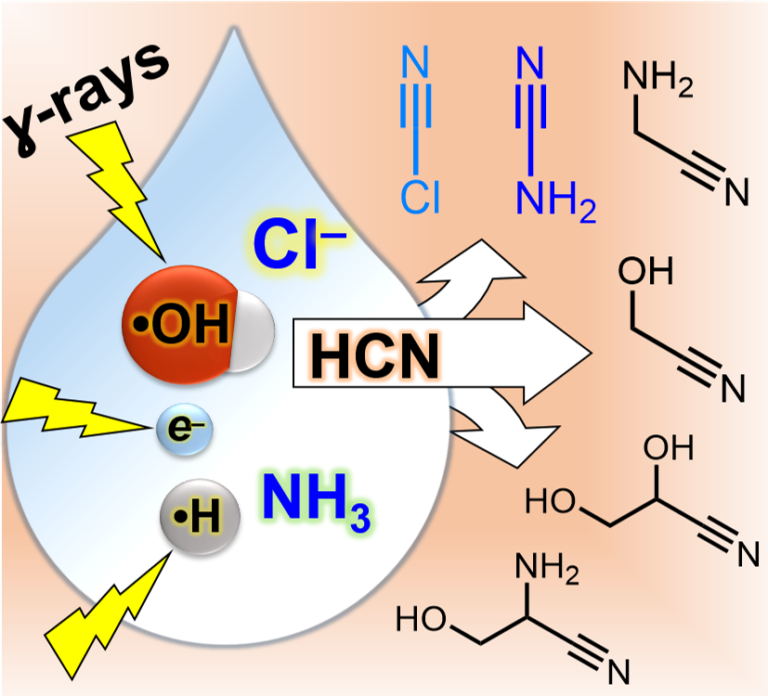
Radiolytic Synthesis of Cyanogen Chloride, Cyanamide and Simple Sugar Precursors
Radiolytic Synthesis of Cyanogen Chloride, Cyanamide and Simple Sugar Precursors
Chemical evolution, from simple molecules to complex systems, is fundamental to modern origins of life research, and complex reaction networks are often supposed to have operated on the early Earth. Herein, a variety of compounds useful particularly for RNA synthesis − namely, cyanogen chloride, cyanamide, and nitrile precursors to simple sugars − are produced in short order by a chemical reaction network starting from hydrogen cyanide and driven by gamma radiolysis. The radiolytic yield of cyanamide was found to be proportional to the concentration of chloride, an often overlooked spectator anion. Aqueous irradiation of hydrogen cyanide in the presence of sodium chloride also affords cyanogen chloride, a possible intermediate in the radiolytic synthesis of cyanamide. Meanwhile, the synthesis of simple sugar precursors is proposed to proceed through a Kiliani-Fischer homologation mechanism made possible by the reducing power of the solvated electron and hydrogen atom. Such a reaction network has the potential to serve as a model for better understanding and engineering chemical evolution of complex mixtures in the laboratory that could have happened on the early Earth.
Synthesis of a Nonhydrolyzable Nucleotide Phosphoroimidazolide Analogue That Catalyzes Nonenzymatic RNA Primer Extension
Synthesis of a Nonhydrolyzable Nucleotide Phosphoroimidazolide Analogue That Catalyzes Nonenzymatic RNA Primer Extension
Abstract not available.
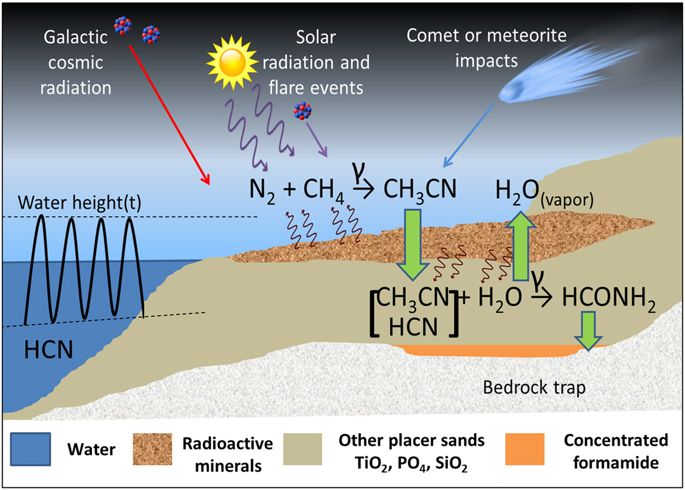
Estimating the capacity for production of formamide by radioactive minerals on the prebiotic Earth
Estimating the capacity for production of formamide by radioactive minerals on the prebiotic Earth
Water creates special problems for prebiotic chemistry, as it is thermodynamically favorable for amide and phosphodiester bonds to hydrolyze. The availability of alternative solvents with more favorable properties for the formation of prebiotic molecules on the early Earth may have helped bypass this so-called “water paradox”. Formamide (FA) is one such solvent, and can serve as a nucleobase precursor, but it is difficult to envision how FA could have been generated in large quantities or accumulated in terrestrial surface environments. We report here the conversion of aqueous acetonitrile (ACN) via hydrogen cyanide (HCN) as an intermediate into FA by γ-irradiation under conditions mimicking exposure to radioactive minerals. We estimate that a radioactive placer deposit could produce 0.1‒0.8 mol FA km−2 year−1. A uraninite fission zone comparable to the Oklo reactors in Gabon can produce 0.1‒1 mol m−2 year−1, orders of magnitude greater than other scenarios of FA production or delivery for which reaching sizeable concentrations of FA are problematic. Radioactive mineral deposits may be favorable settings for prebiotic compound formation through emergent geologic processes and FA-mediated organic chemistry.
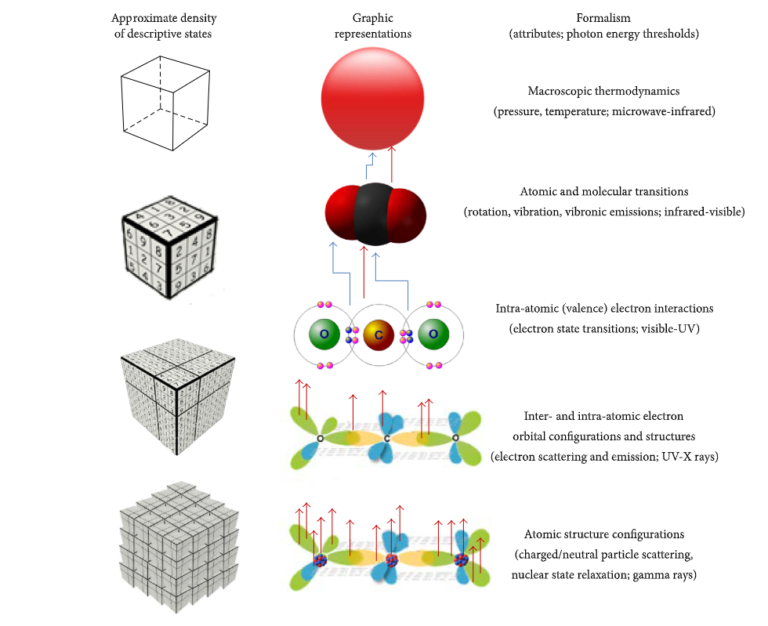
Prebiotic Geochemical Automata at the Intersection of Radiolytic Chemistry, Physical Complexity, and Systems Biology
Prebiotic Geochemical Automata at the Intersection of Radiolytic Chemistry, Physical Complexity, and Systems Biology
The tractable history of life records a successive emergence of organisms composed of hierarchically organized cells and greater degrees of individuation. The lowermost object level of this hierarchy is the cell, but it is unclear whether the organizational attributes of living systems extended backward through prebiotic stages of chemical evolution. If the systems biology attributes of the cell were indeed templated upon prebiotic synthetic relationships between subcellular objects, it is not obvious how to categorize object levels below the cell in ways that capture any hierarchies which may have preceded living systems. In this paper, we map out stratified relationships between physical components that drive the production of key prebiotic molecules starting from radiolysis of a small number of abundant molecular species. Connectivity across multiple levels imparts the potential to create and maintain far-from-equilibrium chemical conditions and to manifest nonlinear system behaviors best approximated using automata formalisms. The architectural attribute of “information hiding” of energy exchange processes at each object level is shared with stable, multitiered automata such as digital computers. These attributes may indicate a profound connection between the system complexity afforded by energy dissipation by subatomic level objects and the emergence of complex automata that could have preceded biological systems.
Solvated-electron production using cyanocuprates is compatible with the UV-environment on a Hadean–Archaean Earth
Solvated-electron production using cyanocuprates is compatible with the UV-environment on a Hadean–Archaean Earth
UV-driven photoredox processing of cyanocuprates can generate simple sugars necessary for prebiotic synthesis. We investigate the wavelength dependence of this process from 215 to 295 nm and generally observe faster rates at shorter wavelengths. The most efficient wavelengths are accessible to a range of potential prebiotic atmospheres, supporting the potential role of cyanocuprate photochemistry in prebiotic synthesis on the early Earth.
Synthesis of imidazole-activated ribonucleotides using cyanogen chloride
Synthesis of imidazole-activated ribonucleotides using cyanogen chloride
We report the syntheses of ribonucleoside 5′-monophosphates activated with imidazole, using a mechanism which relies on the in situ generation of cyanogen chloride from the reaction of cyanide anion with hypochlorous acid. Cyanogen chloride reacts rapidly with imidazole to form diimidazole imine as the major product, a species which affords the activation of ribonucleoside 5′-monophosphates to their 5′-phosphorimidazolides.
2017
Insight into the mechanism of nonenzymatic RNA primer extension from the structure of an RNA-GpppG complex
Insight into the mechanism of nonenzymatic RNA primer extension from the structure of an RNA-GpppG complex
The nonenzymatic copying of RNA templates with imidazole-activated nucleotides is a well-studied model for the emergence of RNA self-replication during the origin of life. We have recently discovered that this reaction can proceed through the formation of an imidazolium-bridged dinucleotide intermediate that reacts rapidly with the primer. To gain insight into the relationship between the structure of this intermediate and its reactivity, we cocrystallized an RNA primer–template complex with a close analog of the intermediate, the triphosphate-bridged guanosine dinucleotide GpppG, and solved a high-resolution X-ray structure of the complex. The structure shows that GpppG binds the RNA template through two Watson–Crick base pairs, with the primer 3ʹ-hydroxyl oriented to attack the 5ʹ-phosphate of the adjacent G residue. Thus, the GpppG structure suggests that the bound imidazolium-bridged dinucleotide intermediate would be preorganized to react with the primer by in-line SN2 substitution. The structures of bound GppG and GppppG suggest that the length and flexibility of the 5ʹ-5ʹ linkage are important for optimal preorganization of the complex, whereas the position of the 5ʹ-phosphate of bound pGpG explains the slow rate of oligonucleotide ligation reactions. Our studies provide a structural interpretation for the observed reactivity of the imidazolium-bridged dinucleotide intermediate in nonenzymatic RNA primer extension.
Common and Potentially Prebiotic Origin for Precursorsof Nucleotide Synthesis and Activation
Common and Potentially Prebiotic Origin for Precursorsof Nucleotide Synthesis and Activation
We have recently shown that 2-aminoimidazole is a superior nucleotide activating group for nonenzymatic RNA copying. Here we describe a prebiotic synthesis of 2-aminoimidazole that shares a common mechanistic pathway with that of 2-aminooxazole, a previously described key intermediate in prebiotic nucleotide synthesis. In the presence of glycolaldehyde, cyanamide, phosphate and ammonium ion, both 2-aminoimidazole and 2-aminooxazole are produced, with higher concentrations of ammonium ion and acidic pH favoring the former. Given a 1:1 mixture of 2-aminoimidazole and 2-aminooxazole, glyceraldehyde preferentially reacts and cyclizes with the latter, forming a mixture of pentose aminooxazolines, and leaving free 2-aminoimidazole available for nucleotide activation. The common synthetic origin of 2-aminoimidazole and 2-aminooxazole and their distinct reactivities are suggestive of a reaction network that could lead to both the synthesis of RNA monomers and to their subsequent chemical activation.
Downstream Oligonucleotides Strongly Enhance the Affinityof GMP to RNA Primer–Template Complexes
Downstream Oligonucleotides Strongly Enhance the Affinityof GMP to RNA Primer–Template Complexes
Origins of life hypotheses often invoke a transitional phase of nonenzymatic template-directed RNA replication prior to the emergence of ribozyme-catalyzed copying of genetic information. Here, using NMR and ITC, we interrogate the binding affinity of guanosine 5′-monophosphate (GMP) for primer–template complexes when either another GMP, or a helper oligonucleotide, can bind downstream. Binding of GMP to a primer–template complex cannot be significantly enhanced by the possibility of downstream monomer binding, because the affinity of the downstream monomer is weaker than that of the first monomer. Strikingly, GMP binding affinity can be enhanced by ca. 2 orders of magnitude when a helper oligonucleotide is stably bound downstream of the monomer binding site. We compare these thermodynamic parameters to those previously reported for T7 RNA polymerase-mediated replication to help address questions of binding affinity in related nonenzymatic processes.
2016
Influence of Constitution and Charge on Radical PairingInteractions in Tris-radical Tricationic Complexes
Influence of Constitution and Charge on Radical PairingInteractions in Tris-radical Tricationic Complexes
The results of a systematic investigation of trisradical tricationic complexes formed between cyclobis(paraquat-p-phenylene) bisradical dicationic (CBPQT2(•+)) rings and a series of 18 dumbbells, containing centrally located 4,4′-bipyridinium radical cationic (BIPY•+) units within oligomethylene chains terminated for the most part by charged 3,5-dimethylpyridinium (PY+) and/or neutral 3,5-dimethylphenyl (PH) groups, are reported. The complexes were obtained by treating equimolar amounts of the CBPQT4+ ring and the dumbbells containing BIPY2+ units with zinc dust in acetonitrile solutions. Whereas UV–Vis–NIR spectra revealed absorption bands centered on ca. 1100 nm with quite different intensities for the 1:1 complexes depending on the constitutions and charges on the dumbbells, titration experiments showed that the association constants (Ka) for complex formation vary over a wide range, from 800 M–1 for the weakest to 180 000 M–1 for the strongest. While Coulombic repulsions emanating from PY+ groups located at the ends of some of the dumbbells undoubtedly contribute to the destabilization of the trisradical tricationic complexes, solid-state superstructures support the contention that those dumbbells with neutral PH groups at the ends of flexible and appropriately constituted links to the BIPY•+ units stand to gain some additional stabilization from C–H···π interactions between the CBPQT2(•+) rings and the PH termini on the dumbbells. The findings reported in this Article demonstrate how structural changes implemented remotely from the BIPY•+ units influence their non-covalent bonding interactions with CBPQT2(•+) rings. Different secondary effects (Coulombic repulsions versus C–H···π interactions) are uncovered, and their contributions to both binding strengths associated with trisradical interactions and the kinetics of associations and dissociations are discussed at some length, supported by extensive DFT calculations at the M06-D3 level. A fundamental understanding of molecular recognition in radical complexes has relevance when it comes to the design and synthesis of non-equilibrium systems.
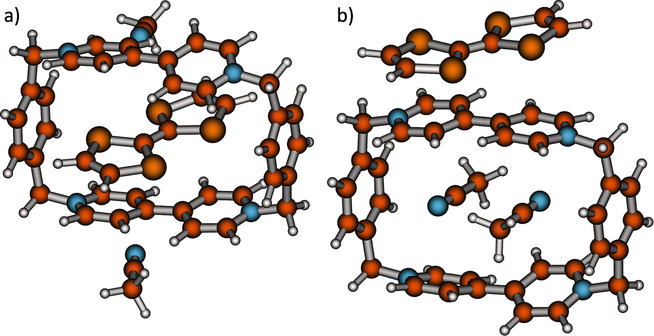
Quantum Mechanical and Experimental Validation that Cyclobis(paraquat‐p‐phenylene) Forms a 1:1 Inclusion Complex with Tetrathiafulvalene
Quantum Mechanical and Experimental Validation that Cyclobis(paraquat‐p‐phenylene) Forms a 1:1 Inclusion Complex with Tetrathiafulvalene
The promiscuous encapsulation of π-electron-rich guests by the π-electron-deficient host, cyclobis(paraquat-p-phenylene) (CBPQT4+), involves the formation of 1:1 inclusion complexes. One of the most intensely investigated charge-transfer (CT) bands, assumed to result from inclusion of a guest molecule inside the cavity of CBPQT4+, is an emerald-green band associated with the complexation of tetrathiafulvalene (TTF) and its derivatives. This interpretation was called into question recently in this journal based on theoretical gas-phase calculations that reinterpreted this CT band in terms of an intermolecular side-on interaction of TTF with one of the bipyridinium (BIPY2+) units of CBPQT4+, rather than the encapsulation of TTF inside the cavity of CBPQT4+. We carried out DFT calculations, including solvation, that reveal conclusively that the CT band emerging upon mixing TTF with CBPQT4+ arises from the formation of a 1:1 inclusion complex. In support of this conclusion, we have performed additional experiments on a [2]rotaxane in which a TTF unit, located in the middle of its short dumbbell, is prevented sterically from interacting with either one of the two BIPY2+ units of a CBPQT4+ ring residing on a separate [2]rotaxane in a side-on fashion. This [2]rotaxane has similar UV/Vis and 1H NMR spectroscopic properties with those of 1:1 inclusion complexes of TTF and its derivatives with CBPQT4+. The [2]rotaxane exists as an equimolar mixture of cis- and trans-isomers associated with the disubstituted TTF unit in its dumbbell component. Solid-state structures were obtained for both isomers, validating the conclusion that the TTF unit, which gives rise to the CT band, resides inside CBPQT4+.
2015
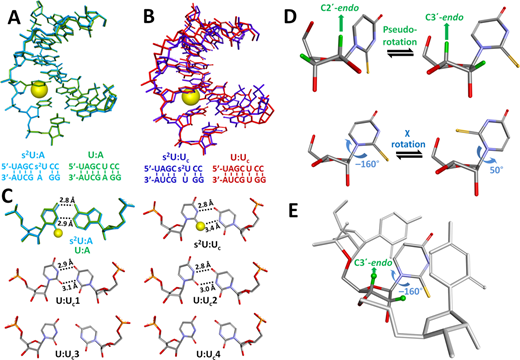
Thermodynamic insights into 2-thiouridine-enhanced RNA hybridization
Thermodynamic insights into 2-thiouridine-enhanced RNA hybridization
Nucleobase modifications dramatically alter nucleic acid structure and thermodynamics. 2-thiouridine (s2U) is a modified nucleobase found in tRNAs and known to stabilize U:A base pairs and destabilize U:G wobble pairs. The recently reported crystal structures of s2U-containing RNA duplexes do not entirely explain the mechanisms responsible for the stabilizing effect of s2U or whether this effect is entropic or enthalpic in origin. We present here thermodynamic evaluations of duplex formation using ITC and UV thermal denaturation with RNA duplexes containing internal s2U:A and s2U:U pairs and their native counterparts. These results indicate that s2U stabilizes both duplexes. The stabilizing effect is entropic in origin and likely results from the s2U-induced preorganization of the single-stranded RNA prior to hybridization. The same preorganizing effect is likely responsible for structurally resolving the s2U:U pair-containing duplex into a single conformation with a well-defined H-bond geometry. We also evaluate the effect of s2U on single strand conformation using UV- and CD-monitored thermal denaturation and on nucleoside conformation using 1H NMR spectroscopy, MD and umbrella sampling. These results provide insights into the effects that nucleobase modification has on RNA structure and thermodynamics and inform efforts toward improving both ribozyme-catalyzed and nonenzymatic RNA copying.
Uncovering the Thermodynamics of Monomer Binding for RNA Replication
Uncovering the Thermodynamics of Monomer Binding for RNA Replication
The nonenzymatic replication of primordial RNA is thought to have been a critical step in the origin of life. However, despite decades of effort, the poor rate and fidelity of model template copying reactions have thus far prevented an experimental demonstration of nonenzymatic RNA replication. The overall rate and fidelity of template copying depend, in part, on the affinity of free ribonucleotides to the RNA primer–template complex. We have now used 1H NMR spectroscopy to directly measure the thermodynamic association constants, Kas, of the standard ribonucleotide monophosphates (rNMPs) to native RNA primer–template complexes. The binding affinities of rNMPs to duplexes with a complementary single-nucleotide overhang follow the order C > G > A > U. Notably, these monomers bind more strongly to RNA primer–template complexes than to the analogous DNA complexes. The relative binding affinities of the rNMPs for complementary RNA primer–template complexes are in good quantitative agreement with the predictions of a nearest-neighbor analysis. With respect to G:U wobble base-pairing, we find that the binding of rGMP to a primer–template complex with a 5′-U overhang is approximately 10-fold weaker than to the complementary 5′-C overhang. We also find that the binding of rGMP is only about 2-fold weaker than the binding of rAMP to 5′-U, consistent with the poor fidelity observed in the nonenzymatic copying of U residues in RNA templates. The accurate Ka measurements for ribonucleotides obtained in this study will be useful for designing higher fidelity, more effective RNA replication systems.
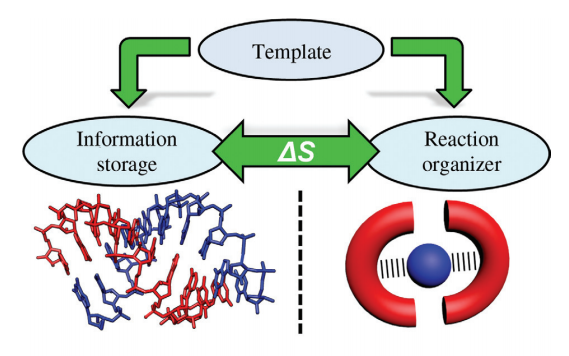
Template-directed nonenzymatic oligonucleotide synthesis: lessons from synthetic chemistry
Template-directed nonenzymatic oligonucleotide synthesis: lessons from synthetic chemistry
The nonenzymatic synthesis of nucleic acids, in particular, RNA, and the template-directed synthesis of artificial organic molecules, such as macrocycles, catenanes and rotaxanes, have both undergone significant development since the last half of the 20th century. The intersection of these two fields affords insights into how template effects can lead to information copying and storage at the molecular level. Mechanistic examples of model template-directed RNA replication experiments as well as those for totally artificial organic template-directed syntheses will be discussed. The fact that templates typically bind to their reacted products more tightly than their unreacted substrates may be a mechanistic feature necessary to store information in the form of nucleic acids. Understanding the mechanisms of nonenzymatic RNA synthesis is not only essential for testing the RNA world hypothesis in the context of the origin of life on Earth and other planetary bodies, but may one day afford chemists the insights to construct their own artificial molecular replicators.
2014
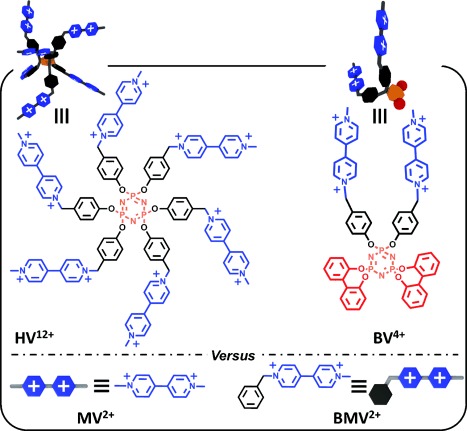
Radical‐Cation Dimerization Overwhelms Inclusion in [n]Pseudorotaxanes
Radical‐Cation Dimerization Overwhelms Inclusion in [n]Pseudorotaxanes
Suppression of the dimerization of the viologen radical cation by cucurbit[7]uril (CB7) in water is a well-known phenomenon. Herein, two counter-examples are presented. Two viologen-containing thread molecules were designed, synthesized, and thoroughly characterized by 1H DOSY NMR spectrometry, UV/Vis absorption spectrophotometry, square-wave voltammetry, and chronocoulometry: BV4+, which contains two viologen subunits, and HV12+, which contains six. In both threads, the viologen subunits are covalently bonded to a hexavalent phosphazene core. The corresponding [3]- and [7]pseudorotaxanes that form on complexation with CB7, that is, BV4+⊂(CB7)2 and HV12+⊂(CB7)6, were also analyzed. The properties of two monomeric control threads, namely, methyl viologen (MV2+) and benzyl methyl viologen (BMV2+), as well as their [2]pseudorotaxane complexes with CB7 (MV2+⊂CB7 and BMV2+⊂CB7) were also investigated. As expected, the control pseudorotaxanes remained intact after one-electron reduction of their viologen-recognition stations. In contrast, analogous reduction of BV4+⊂(CB7)2 and HV12+⊂(CB7)6 led to host–guest decomplexation and release of the free threads BV2(.+) and HV6(.+), respectively. 1H DOSY NMR spectrometric and chronocoulometric measurements showed that BV2(.+) and HV6(.+) have larger diffusion coefficients than the corresponding [3]- and [7]pseudorotaxanes, and UV/Vis absorption studies provided evidence for intramolecular radical-cation dimerization. These results demonstrate that radical-cation dimerization, a relatively weak interaction, can be used as a driving force in novel molecular switches.
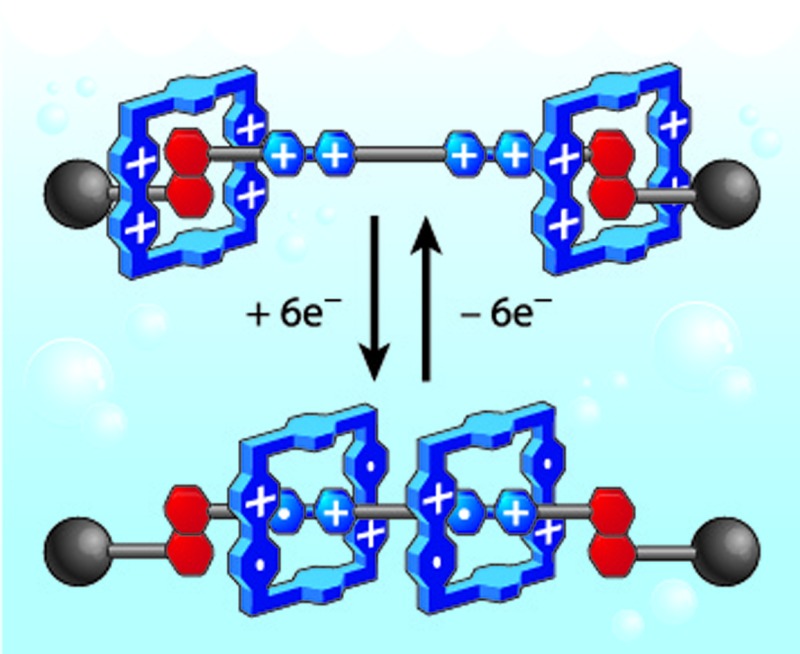
Relative contractile motion of the rings in a switchable palindromic [3]rotaxane in aqueous solution driven by radical-pairing interactions
Relative contractile motion of the rings in a switchable palindromic [3]rotaxane in aqueous solution driven by radical-pairing interactions
Artificial muscles are an essential component for the development of next-generation prosthetic devices, minimally invasive surgical tools, and robotics. This communication describes the design, synthesis, and characterisation of a mechanically interlocked molecule (MIM), capable of switchable and reversible linear molecular motion in aqueous solution that mimics muscular contraction and extension. Compatibility with aqueous solution was achieved in the doubly bistable palindromic [3]rotaxane design by using radical-based molecular recognition as the driving force to induce switching.
2013
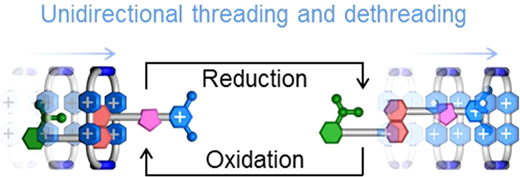
Relative Unidirectional Translation in an Artificial Molecular Assembly Fueled by Light
Relative Unidirectional Translation in an Artificial Molecular Assembly Fueled by Light
Motor molecules present in nature convert energy inputs, such as a chemical fuel or incident photons of light, into directed motion and force biochemical systems away from thermal equilibrium. The ability not only to control relative movements of components in molecules but also to drive their components preferentially in one direction relative to each other using versatile stimuli is one of the keys to future technological applications. Herein, we describe a wholly synthetic small-molecule system that, under the influence of chemical reagents, electrical potential, or visible light, undergoes unidirectional relative translational motion. Altering the redox state of a cyclobis(paraquat-p-phenylene) ring simultaneously (i) inverts the relative heights of kinetic barriers presented by the two terminione a neutral 2-isopropylphenyl group and the other a positively charged 3,5-dimethylpyridinium unitof a constitutionally asymmetric dumbbell, which can impair the threading/dethreading of a [2]pseudorotaxane, and (ii) controls the ring’s affinity for a 1,5-dioxynaphthalene binding site located in the dumbbell’s central core. The formation and subsequent dissociation of the [2]pseudorotaxane by passage of the ring over the neutral and positively charged termini of the dumbbell component in one, and only one, direction relatively defined has been demonstrated by (i) spectroscopic (1H NMR and UV/vis) means and cyclic voltammetry as well as with (ii) DFT calculations and by (iii) comparison with control compounds in the shape of constitutionally symmetrical [2]pseudorotaxanes, one with two positively charged ends and the other with two neutral ends. The operation of the system relies solely on reversible, yet stable, noncovalent bonding interactions. Moreover, in the presence of a photosensitizer, visible-light energy is the only fuel source that is needed to drive the unidirectional molecular translation, making it feasible to repeat the operation numerous times without the buildup of byproducts.
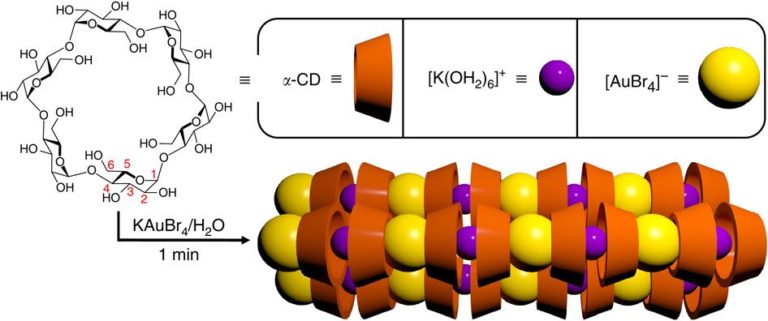
Selective isolation of gold facilitated by second-sphere coordination with α-cyclodextrin
Selective isolation of gold facilitated by second-sphere coordination with α-cyclodextrin
Gold recovery using environmentally benign chemistry is imperative from an environmental perspective. Here we report the spontaneous assembly of a one-dimensional supramolecular complex with an extended {[K(OH2)6][AuBr4](α-cyclodextrin)2}n chain superstructure formed during the rapid co-precipitation of α-cyclodextrin and KAuBr4 in water. This phase change is selective for this gold salt, even in the presence of other square-planar palladium and platinum complexes. From single-crystal X-ray analyses of six inclusion complexes between α-, β- and γ-cyclodextrins with KAuBr4 and KAuCl4, we hypothesize that a perfect match in molecular recognition between α-cyclodextrin and [AuBr4]− leads to a near-axial orientation of the ion with respect to the α-cyclodextrin channel, which facilitates a highly specific second-sphere coordination involving [AuBr4]− and [K(OH2)6]+ and drives the co-precipitation of the 1:2 adduct. This discovery heralds a green host–guest procedure for gold recovery from gold-bearing raw materials making use of α-cyclodextrin—an inexpensive and environmentally benign carbohydrate.
Beyond Perylene Diimides—Diazaperopyrenium Dications as Chameleonic Nanoscale Building Blocks
Beyond Perylene Diimides—Diazaperopyrenium Dications as Chameleonic Nanoscale Building Blocks
Abstract not available.
A Radically Configurable Six-State Compound
A Radically Configurable Six-State Compound
Most organic radicals possess short lifetimes and quickly undergo dimerization or oxidation. Here, we report on the synthesis by radical templation of a class of air- and water-stable organic radicals, trapped within a homo[2]catenane composed of two rigid and fixed cyclobis(paraquat-p-phenylene) rings. The highly energetic octacationic homo[2]catenane, which is capable of accepting up to eight electrons, can be configured reversibly, both chemically and electrochemically, between each one of six experimentally accessible redox states (0, 2+, 4+, 6+, 7+, and 8+) from within the total of nine states evaluated by quantum mechanical methods. All six of the observable redox states have been identified by electrochemical techniques, three (4+, 6+, and 7+) have been characterized by x-ray crystallography, four (4+, 6+, 7+, and 8+) by electron paramagnetic resonance spectroscopy, one (7+) by superconducting quantum interference device magnetometry, and one (8+) by nuclear magnetic resonance spectroscopy.
Organic Switches for Surfaces and Devices
Organic Switches for Surfaces and Devices
The pursuit to achieve miniaturization has tantalized researchers across the fields of chemistry, physics, biology, materials science and engineering for over half a century because of its many alluring potential applications. As alternatives to traditional “top-down” manufacturing, “bottom-up” approaches, originating from the (supra)molecular level, have enabled researchers to develop switches which can be manipulated on surfaces at nanoscale dimensions with deft precision using simple external triggers. Once on surfaces, these organic switches have been shown to modulate both the physical and chemical surface properties. In this Progress Report, we shed light on recent advances made in our laboratories towards integrated systems using all-organic switches on a variety of substrates. Design concepts are revealed, as well as the overall impact of all-organic switches on the properties of their substrates, while emphasizing the considerable promise and formidable challenges these advanced composite materials pose when it comes to conferring function on them.
Mechanical Bond-Induced Radical Stabilization
Mechanical Bond-Induced Radical Stabilization
A homologous series of [2]rotaxanes, in which cyclobis(paraquat-p-phenylene) (CBPQT4+) serves as the ring component, while the dumbbell components all contain single 4,4′-bipyridinium (BIPY2+) units centrally located in the midst of oligomethylene chains of varying lengths, have been synthesized by taking advantage of radical templation and copper-free azide–alkyne 1,3-dipolar cycloadditions in the formation of their stoppers. Cyclic voltammetry, UV/vis spectroscopy, and mass spectrometry reveal that the BIPY•+ radical cations in this series of [2]rotaxanes are stabilized against oxidation, both electrochemically and by atmospheric oxygen. The enforced proximity between the BIPY2+ units in the ring and dumbbell components gives rise to enhanced Coulombic repulsion, destabilizing the ground-state co-conformations of the fully oxidized forms of these [2]rotaxanes. The smallest [2]rotaxane, with only three methylene groups on each side of its dumbbell component, is found to exist under ambient conditions in a monoradical state, a situation which does not persist in acetonitrile solution, at least in the case of its longer analogues. 1H NMR spectroscopy reveals that the activation energy barriers to the shuttling of the CBPQT4+ rings over the BIPY2+ units in the dumbbells increase linearly with increasing oligomethylene chain lengths across the series of [2]rotaxanes. These findings provide a new way of producing highly stabilized BIPY•+ radical cations and open up more opportunities to use stable organic radicals as building blocks for the construction of paramagnetic materials and conductive molecular electronic devices.
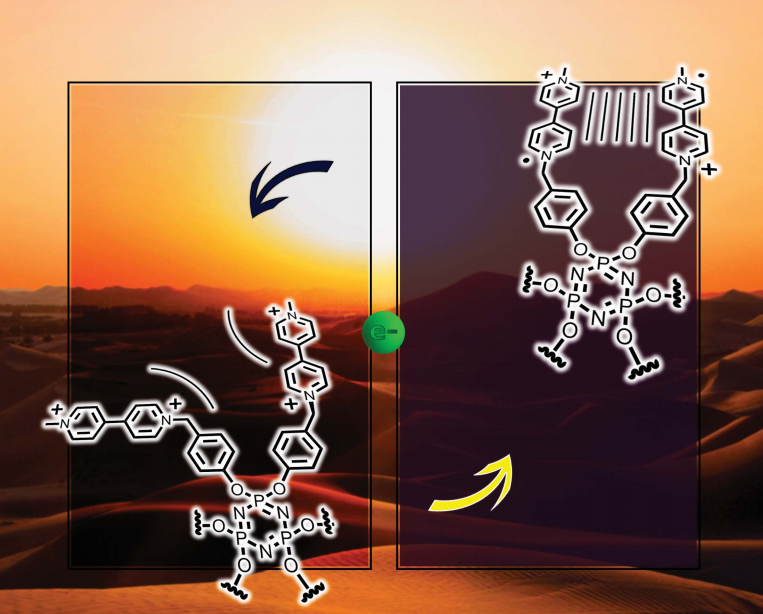
Intramolecular redox-induced dimerization in a viologen dendrimer
Intramolecular redox-induced dimerization in a viologen dendrimer
The redox chemistry of a newly synthesized small dendrimer containing six peripheral viologen units and a phosphazene core is described. The one-electron reduction of each viologen (total six electrons) leads to intermolecular dimerization of the reduced viologens borne by the same phosphorous atom, resulting in a color change from colourless to purple providing it with potential electrochromic applications.
2012
A Semiconducting Organic Radical Cationic Host–Guest Complex
A Semiconducting Organic Radical Cationic Host–Guest Complex
The self-assembly and solid-state semiconducting properties of single crystals of a trisradical tricationic complex composed of the diradical dicationic cyclobis(paraquat-p-phenylene) (CBPQT2(•+)) ring and methyl viologen radical cation (MV•+) are reported. An organic field effect transistor incorporating single crystals of the CBPQT2(•+)⊂MV•+ complex was constructed using lithographic techniques on a silicon substrate and shown to exhibit p-type semiconductivity with a mobility of 0.05 cm2 V–1 s–1. The morphology of the crystals on the silicon substrate was characterized using scanning electron microscopy which revealed that the complexes self-assemble into “molecular wires” observable by the naked-eye as millimeter long crystalline needles. The nature of the recognition processes driving this self-assembly, radical–radical interactions between bipyridinium radical cations (BIPY•+), was further investigated by resonance Raman spectroscopy in conjunction with theoretical investigations of the vibrational modes, and was supported by X-ray structural analyses of the complex and its free components in both their radical cationic and dicationic redox states. These spectroscopic investigations demonstrate that the bond order of the BIPY•+ radical cationic units of host and guest components is not changed upon complexation, an observation which relates to its conductivity in the solid-state. We envision the modularity inherent in this kind of host–guest complexation could be harnessed to construct a library of custom-made electronic organic materials tailored to fit the specific needs of a given electronic application.
Tetrathiafulvalene Hetero Radical Cation Dimerization in a Redox-Active [2]Catenane
Tetrathiafulvalene Hetero Radical Cation Dimerization in a Redox-Active [2]Catenane
The electronic properties of tetrathiafulvalene (TTF) can be tuned by attaching electron-donating or electron-withdrawing substituents. An electron-rich macrocyclic polyether containing two TTF units of different constitutions, namely 4,4′-bis(hydroxymethyl)tetrathiafulvalene (OTTFO) and 4,4′-bisthiotetrathiafulvalene (STTFS), has been synthesized. On two-electron oxidation, a hetero radical dimer is formed between OTTFO•+ and STTFS•+. The redox behavior of the macrocyclic polyether has been investigated by electrochemical techniques and UV–vis and electron paramagnetic resonance (EPR) spectroscopies. The [2]catenane in which the macrocyclic polyether is mechanically interlocked with the cyclobis(paraquat-p-phenylene) (CBPQT4+) ring has also been prepared using template-directed protocols. In the case of the [2]catenane, the formation of the TTF hetero radical dimer is prevented sterically by the CBPQT4+ ring. After a one-electron oxidation, a 70:30 ratio of OTTFO•+ to STTFS•+ is present at equilibrium, and, as a result, two translational isomers of the [2]catenane associated with these electronically different isomeric states transpire. EPR titration spectroscopy and simulations reveal that the radical states of the two constitutionally different TTF units in the [2]catenane still experience long-range electronic intramolecular coupling interactions, despite the presence of the CBPQT4+ ring, when one or both of them are oxidized to the radical cationic state. These findings in the case of both the free macrocyclic polyether and the [2]catenane have led to a deeper fundamental understanding of the mechanism of radical cation dimer formation between constitutionally different TTF units.
The Chameleonic Nature of Diazaperopyrenium Recognition Processes
The Chameleonic Nature of Diazaperopyrenium Recognition Processes
Abstract not available.
Radically Enhanced Molecular Switches
Radically Enhanced Molecular Switches
The mechanism governing the redox-stimulated switching behavior of a tristable [2]rotaxane consisting of a cyclobis(paraquat-p-phenylene) (CBPQT4+) ring encircling a dumbbell, containing tetrathiafulvalene (TTF) and 1,5-dioxynaphthalene (DNP) recognition units which are separated from each other along a polyether chain carrying 2,6-diisopropylphenyl stoppers by a 4,4′-bipyridinium (BIPY2+) unit, is described. The BIPY2+ unit acts to increase the lifetime of the metastable state coconformation (MSCC) significantly by restricting the shuttling motion of the CBPQT4+ ring to such an extent that the MSCC can be isolated in the solid state and is stable for weeks on end. As controls, the redox-induced mechanism of switching of two bistable [2]rotaxanes and one bistable [2]catenane composed of CBPQT4+ rings encircling dumbbells or macrocyclic polyethers, respectively, that contain a BIPY2+ unit with either a TTF or DNP unit, is investigated. Variable scan-rate cyclic voltammetry and digital simulations of the tristable and bistable [2]rotaxanes and [2]catenane reveal a mechanism which involves a bisradical state coconformation (BRCC) in which only one of the BIPY•+ units in the CBPQT2(•+) ring is oxidized to the BIPY2+ dication. This observation of the BRCC was further confirmed by theoretical calculations as well as by X-ray crystallography of the [2]catenane in its bisradical tetracationic redox state. It is evident that the incorporation of a kinetic barrier between the donor recognition units in the tristable [2]rotaxane can prolong the lifetime and stability of the MSCC, an observation which augurs well for the development of nonvolatile molecular flash memory devices.
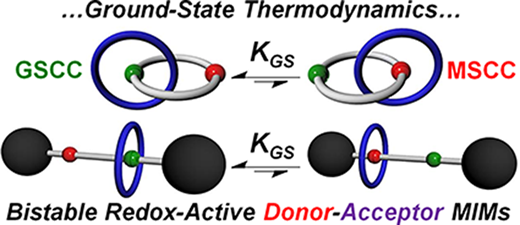
Ground-State Thermodynamics of Bistable Redox-Active Donor–Acceptor Mechanically Interlocked Molecules
Ground-State Thermodynamics of Bistable Redox-Active Donor–Acceptor Mechanically Interlocked Molecules
Fashioned through billions of years of evolution, biological molecular machines, such as ATP synthase, myosin, and kinesin, use the intricate relative motions of their components to drive some of life’s most essential processes. Having control over the motions in molecules is imperative for life to function, and many chemists have designed, synthesized, and investigated artificial molecular systems that also express controllable motions within molecules. Using bistable mechanically interlocked molecules (MIMs), based on donor–acceptor recognition motifs, we have sought to imitate the sophisticated nanoscale machines present in living systems. In this Account, we analyze the thermodynamic characteristics of a series of redox-switchable [2]rotaxanes and [2]catenanes. Control and understanding of the relative intramolecular movements of components in MIMs have been vital in the development of a variety of applications of these compounds ranging from molecular electronic devices to drug delivery systems.
Room-temperature ferroelectricity in supramolecular networks of charge-transfer complexes
Room-temperature ferroelectricity in supramolecular networks of charge-transfer complexes
Materials exhibiting a spontaneous electrical polarization1,2 that can be switched easily between antiparallel orientations are of potential value for sensors, photonics and energy-efficient memories. In this context, organic ferroelectrics3,4 are of particular interest because they promise to be lightweight, inexpensive and easily processed into devices. A recently identified family of organic ferroelectric structures is based on intermolecular charge transfer, where donor and acceptor molecules co-crystallize in an alternating fashion known as a mixed stack5,6,7,8: in the crystalline lattice, a collective transfer of electrons from donor to acceptor molecules results in the formation of dipoles that can be realigned by an external field as molecules switch partners in the mixed stack. Although mixed stacks have been investigated extensively, only three systems are known9,10 to show ferroelectric switching, all below 71 kelvin. Here we describe supramolecular charge-transfer networks that undergo ferroelectric polarization switching with a ferroelectric Curie temperature above room temperature. These polar and switchable systems utilize a structural synergy between a hydrogen-bonded network and charge-transfer complexation of donor and acceptor molecules in a mixed stack. This supramolecular motif could help guide the development of other functional organic systems that can switch polarization under the influence of electric fields at ambient temperatures.
Controlling Switching in Bistable [2]Catenanes by Combining Donor–Acceptor and Radical–Radical Interactions
Controlling Switching in Bistable [2]Catenanes by Combining Donor–Acceptor and Radical–Radical Interactions
Two redox-active bistable [2]catenanes composed of macrocyclic polyethers of different sizes incorporating both electron-rich 1,5-dioxynaphthalene (DNP) and electron-deficient 4,4′-bipyridinium (BIPY2+) units, interlocked mechanically with the tetracationic cyclophane cyclobis(paraquat-p-phenylene) (CBPQT4+), were obtained by donor–acceptor template-directed syntheses in a threading-followed-by-cyclization protocol employing Cu(I)-catalyzed azide–alkyne 1,3-dipolar cycloadditions in the final mechanical-bond forming steps. These bistable [2]catenanes exemplify a design strategy for achieving redox-active switching between two translational isomers, which are driven (i) by donor–acceptor interactions between the CBPQT4+ ring and DNP, or (ii) radical–radical interactions between CBPQT2(•+) and BIPY•+, respectively. The switching processes, as well as the nature of the donor–acceptor interactions in the ground states and the radical–radical interactions in the reduced states, were investigated by single-crystal X-ray crystallography, dynamic 1H NMR spectroscopy, cyclic voltammetry, UV/vis spectroelectrochemistry, and electron paramagnetic resonance (EPR) spectroscopy. The crystal structure of one of the [2]catenanes in its trisradical tricationic redox state provides direct evidence for the radical–radical interactions which drive the switching processes for these types of mechanically interlocked molecules (MIMs). Variable-temperature 1H NMR spectroscopy reveals a degenerate rotational motion of the BIPY2+ units in the CBPQT4+ ring for both of the two [2]catenanes, that is governed by a free energy barrier of 14.4 kcal mol–1 for the larger catenane and 17.0 kcal mol–1 for the smaller one. Cyclic voltammetry provides evidence for the reversibility of the switching processes which occurs following a three-electron reduction of the three BIPY2+ units to their radical cationic forms. UV/vis spectroscopy confirms that the processes driving the switching are (i) of the donor–acceptor type, by the observation of a 530 nm charge-transfer band in the ground state, and (ii) of the radical–radical ilk in the switched state as indicated by an intense visible absorption (ca. 530 nm) and near-infrared (ca. 1100 nm) bands. EPR spectroscopic data reveal that, in the switched state, the interacting BIPY•+ radical cations are in a fast exchange regime. In general, the findings lay the foundations for future investigations where this radical–radical recognition motif is harnessed in bistable redox-active MIMs in order to achieve close to homogeneous populations of co-conformations in both the ground and switched states.
Mechanically induced intramolecular electron transfer in a mixed-valence molecular shuttle
Mechanically induced intramolecular electron transfer in a mixed-valence molecular shuttle
The kinetics and thermodynamics of intramolecular electron transfer (IET) can be subjected to redox control in a bistable [2]rotaxane comprised of a dumbbell component containing an electron-rich 1,5-dioxynaphthalene (DNP) unit and an electron-poor phenylene-bridged bipyridinium (P-BIPY2+) unit and a cyclobis (paraquat-p-phenylene) (CBPQT4+) ring component. The [2]rotaxane exists in the ground-state co-conformation (GSCC) wherein the CBPQT4+ ring encircles the DNP unit. Reduction of the CBPQT4+ leads to the CBPQT2(•+) diradical dication while the P-BIPY2+ unit is reduced to its P-BIPY•+ radical cation. A radical-state co-conformation (RSCC) results from movement of the CBPQT2(•+) ring along the dumbbell to surround the P-BIPY•+ unit. This shuttling event induces IET to occur between the pyridinium redox centers of the P-BIPY•+ unit, a property which is absent between these redox centers in the free dumbbell and in the 1∶1 complex formed between the CBPQT2(•+) ring and the radical cation of methyl-phenylene-viologen (MPV•+). Using electron paramagnetic resonance (EPR) spectroscopy, the process of IET was investigated by monitoring the line broadening at varying temperatures and determining the rate constant (kET = 1.33 × 10⁷ s-1) and activation energy (ΔG‡ = 1.01 kcal mol-1) for electron transfer. These values were compared to the corresponding values predicted, using the optical absorption spectra and Marcus–Hush theory.
Solvent‐dependent ground‐state distributions in a donor–acceptor redox‐active bistable [2]catenane
Solvent‐dependent ground‐state distributions in a donor–acceptor redox‐active bistable [2]catenane
The solvent dependency of the ground-state distribution as well as the electrochemical switching behavior in a redox-active bistable donor–acceptor [2]catenane, containing bisthiotetrathiafulvalene (STTFS) and 1,5-dioxynaphthalene (DNP) recognition sites incorporated within a macrocyclic polyether encircled by the cyclobis(paraquat-p-phenylene) (CBPQT4+) ring, has been investigated. There are two translational isomers: (i) the ground-state co-conformation (GSCC) in which the CBPQT4+ ring encircles the STTFS unit and (ii) the metastable-state co-conformation (MSCC) in which the CBPQT4+ ring encircles the DNP unit. 1H NMR spectroscopy indicates that the ground-state distribution of GSCC to MSCC varies from approximately 1:1 in MeCN to 7:1 in MeCN : H2O (1:1, v/v) at 283 K. The reversible electrochemical switching behavior of the [2]catenane was confirmed by 1H NMR and UV−Vis spectroscopies, as well as by cyclic voltammetry (CV). Additionally, variable scan-rate CV studies were compared with simulated CV data and show that the ground-state distribution of GSCC to MSCC is about 30:1 in MeCN : H2O (1:1, v/v) at 298 K. With the assistance of isothermal titration calorimetry of model compounds, it was found that the changing ground-state distribution in differing solvent systems is driven entropically rather than enthalpically.
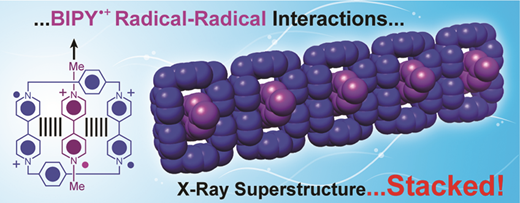
Solution-Phase Mechanistic Study and Solid-State Structure of a Tris(bipyridinium radical cation) Inclusion Complex
Solution-Phase Mechanistic Study and Solid-State Structure of a Tris(bipyridinium radical cation) Inclusion Complex
The ability of the diradical dicationic cyclobis(paraquat-p-phenylene) (CBPQT2(•+)) ring to form inclusion complexes with 1,1′-dialkyl-4,4′-bipyridinium radical cationic (BIPY•+) guests has been investigated mechanistically and quantitatively. Two BIPY•+ radical cations, methyl viologen (MV•+) and a dibutynyl derivative (V•+), were investigated as guests for the CBPQT2(•+) ring. Both guests form trisradical complexes, namely, CBPQT2(•+)⊂MV•+ and CBPQT2(•+)⊂V•+, respectively. The structural details of the CBPQT2(•+)⊂MV•+ complex, which were ascertained by single-crystal X-ray crystallography, reveal that MV•+ is located inside the cavity of the ring in a centrosymmetric fashion: the 1:1 complexes pack in continuous radical cation stacks. A similar solid-state packing was observed in the case of CBPQT2(•+) by itself. Quantum mechanical calculations agree well with the superstructure revealed by X-ray crystallography for CBPQT2(•+)⊂MV•+ and further suggest an electronic asymmetry in the SOMO caused by radical-pairing interactions. The electronic asymmetry is maintained in solution. The thermodynamic stability of the CBPQT2(•+)⊂MV•+ complex was probed by both isothermal titration calorimetry (ITC) and UV/vis spectroscopy, leading to binding constants of (5.0 ± 0.6) × 104 M–1 and (7.9 ± 5.5) × 104 M–1, respectively. The kinetics of association and dissociation were determined by stopped-flow spectroscopy, yielding a kf and kb of (2.1 ± 0.3) × 106 M–1 s–1 and 250 ± 50 s–1, respectively. The electrochemical mechanistic details were studied by variable scan rate cyclic voltammetry (CV), and the experimental data were compared digitally with simulated data, modeled on the proposed mechanism using the thermodynamic and kinetic parameters obtained from ITC, UV/vis, and stopped-flow spectroscopy. In particular, the electrochemical mechanism of association/dissociation involves a bisradical tetracationic intermediate CBPQT(2+)(•+)⊂V•+ inclusion complex; in the case of the V•+ guest, the rate of disassociation (kb = 10 ± 2 s–1) was slow enough that it could be detected and quantified by variable scan rate CV. All the experimental observations lead to the speculation that the CBPQT(2+)(•+) ring of the bisradical tetracation complex might possess the unique property of being able to recognize both BIPY•+ radical cation and π-electron-rich guests simultaneously. The findings reported herein lay the foundation for future studies where this radical–radical recognition motif is harnessed particularly in the context of mechanically interlocked molecules and increases our fundamental understanding of BIPY•+ radical–radical interactions in solution as well as in the solid-state.
Rapid thermally assisted donor–acceptor catenation
Rapid thermally assisted donor–acceptor catenation
Charged donor–acceptor [2]catenanes containing cyclobis(paraquat-p-phenylene) as the ring component can be synthesised in yields of up to 88% in under one hour by heating two precursors in the presence of macrocyclic polyether templates in N,N-dimethylformamide at 80 °C.
The effects of conformation on the noncovalent bonding interactions in a bistable donor–acceptor [3]catenane
The effects of conformation on the noncovalent bonding interactions in a bistable donor–acceptor [3]catenane
A switchable donor–acceptor bistable [3]catenane, composed of a crown ether containing a pair of alternating π-electron rich tetrathiafulvalene and 1,5-dioxynaphthalene units, encircled by two π-electron deficient cyclobis(paraquat-p-phenylene) rings, has been synthesised and the redox-activated switching it undergoes investigated.
2011
Measurement of the ground-state distributions in bistable mechanically interlocked molecules using slow scan rate cyclic voltammetry
Measurement of the ground-state distributions in bistable mechanically interlocked molecules using slow scan rate cyclic voltammetry
In donor–acceptor mechanically interlocked molecules that exhibit bistability, the relative populations of the translational isomers—present, for example, in a bistable [2]rotaxane, as well as in a couple of bistable [2]catenanes of the donor–acceptor vintage—can be elucidated by slow scan rate cyclic voltammetry. The practice of transitioning from a fast scan rate regime to a slow one permits the measurement of an intermediate redox couple that is a function of the equilibrium that exists between the two translational isomers in the case of all three mechanically interlocked molecules investigated. These intermediate redox potentials can be used to calculate the ground-state distribution constants, K. Whereas, (i) in the case of the bistable [2]rotaxane, composed of a dumbbell component containing π-electron-rich tetrathiafulvalene and dioxynaphthalene recognition sites for the ring component (namely, a tetracationic cyclophane, containing two π-electron-deficient bipyridinium units), a value for K of 10 ± 2 is calculated, (ii) in the case of the two bistable [2]catenanes—one containing a crown ether with tetrathiafulvalene and dioxynaphthalene recognition sites for the tetracationic cyclophane, and the other, tetrathiafulvalene and butadiyne recognition sites—the values for K are orders (one and three, respectively) of magnitude greater. This observation, which has also been probed by theoretical calculations, supports the hypothesis that the extra stability of one translational isomer over the other is because of the influence of the enforced side-on donor–acceptor interactions brought about by both π-electron-rich recognition sites being part of a macrocyclic polyether.
Reactions under the Click Chemistry Philosophy Employed in Supramolecular and Mechanostereochemical Systems
Reactions under the Click Chemistry Philosophy Employed in Supramolecular and Mechanostereochemical Systems
Supramolecular chemistry and mechanostereochemistry have been major beneficiaries of the concepts and reactions pioneered under the “click chemistry” philosophy. The success of the copper(I) 1,3-dipolar cycloaddition between azides and alkynes, resulting in the triazole ring has inspired the application of other emerging click reactions, for example, Diels–Alder cycloadditions, thiol–ene/yne chemistry, and nitrile N-oxide cycloadditions, towards the creation of advanced functional supramolecular and mechanostereochemical systems. In this Focus Review, recent advances in the use of click chemistry in these fields are highlighted.
A Light‐Stimulated Molecular Switch Driven by Radical–Radical Interactions in Water
A Light‐Stimulated Molecular Switch Driven by Radical–Radical Interactions in Water
Abstract not available.
Electrostatic Barriers in Rotaxanes and Pseudorotaxanes
Electrostatic Barriers in Rotaxanes and Pseudorotaxanes
The ability to control the kinetic barriers governing the relative motions of the components in mechanically interlocked molecules is important for future applications of these compounds in molecular electronic devices. In this Full Paper, we demonstrate that bipyridinium (BIPY2+) dications fulfill the role as effective electrostatic barriers for controlling the shuttling and threading behavior for rotaxanes and pseudorotaxanes in aqueous environments. A degenerate [2]rotaxane, composed of two 1,5-dioxynaphthalene (DNP) units flanking a central BIPY2+ unit in the dumbbell component and encircled by the cyclobis(paraquat-p-phenylene) (CBPQT4+) tetracationic cyclophane, has been synthesized employing a threading-followed-by-stoppering approach. Variable-temperature 1H NMR spectroscopy reveals that the barrier to shuttling of the CBPQT4+ ring over the central BIPY2+ unit is in excess of 17 kcal mol−1 at 343 K. Further information about the nature of the BIPY2+ unit as an electrostatic barrier was gleaned from related supramolecular systems, utilizing two threads composed of either two DNP units flanking a central BIPY2+ moiety or a central DNP unit flanked by a BIPY2+ moiety. The threading and dethreading processes of the CBPQT4+ ring with these compounds, which were investigated by spectrophotometric techniques, reveal that the BIPY2+ unit is responsible for affecting both the thermodynamics and kinetics of pseudorotaxane formation by means of an intramolecular self-folding (through donor–acceptor interactions with the DNP unit), in addition to Coulombic repulsion. In particular, the free energy barrier to threading (Δequation image) of the CBPQT4+ for the case of the thread composed of a DNP flanked by two BIPY2+ units was found to be as high as 21.7 kcal mol−1 at room temperature. These results demonstrate that we can effectively employ the BIPY2+ unit to serve as electrostatic barriers in water in order to gain control over the motions of the CBPQT4+ ring in both mechanically interlocked and supramolecular systems.
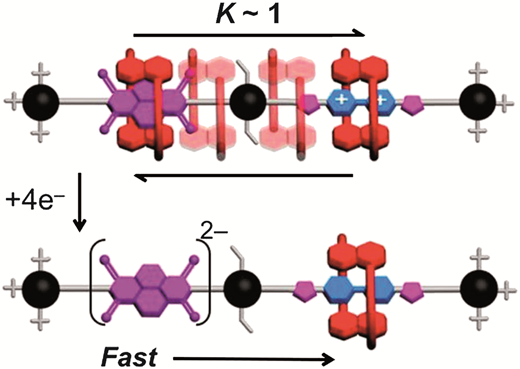
A redox-active reverse donor–acceptor bistable [2]rotaxane
A redox-active reverse donor–acceptor bistable [2]rotaxane
The synthesis and the dynamic behavior of a bistable [2]rotaxane, based on a reverse donor–acceptor motif containing naphthalene diimide (NpI) and 4,4′-bipyridinium (BIPY2+) as two electron-deficient stations and bis-1,5-dioxynaphthalene[38]crown-10 (BDNP38C10) as the electron-rich ring, is described. A functionalized tetraarylmethane moiety has been incorporated between the two stations in order to control the free energy barrier for the shuttling of the BDNP38C10 on the dumbbell component. The bistable [2]rotaxane was synthesized using the so-called “threading-followed-by-stoppering” approach and characterized by NMR spectroscopy and mass spectrometry. Initially, the BDNP38C10 ring resides on the NpI station on account of the synthetic approach employed in the synthesis of the bistable [2]rotaxane. 1H NMR spectroscopy was used to follow the equilibration process between the two translational isomers of the bistable [2]rotaxane—namely, NpI ⊂ BDNP38C10 and BIPY2+ ⊂ BDNP38C10. After 72 h, equilibrium was reached with a 3 : 2 ratio of the two translational isomers in favor of the NpI ⊂ BDNP38C10 co-conformation in CD3CN. The rate of relaxation of the crown ether from NpI ⊂ BDNP38C10 back to BIPY2+ ⊂ BDNP38C10 was associated with a rate constant of 2.2 ± 0.3 × 10⁻⁵ s−1 (t1/2 = 3.4 h), corresponding to a free energy of activation of 23.8 ± 0.1 kcal mol−1. Cyclic voltammetry (CV) reveals that the BDNP38C10 ring can be enticed to pass over the speed bump onto the neutral BIPY0 unit upon the generation of the NpI2− dianion, even although the neutral BIPY0 has presumably little or no affinity for the BDNP38C10 ring.
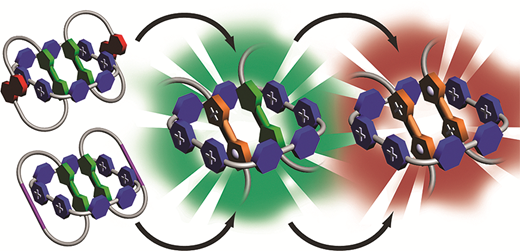
Mechanically Stabilized Tetrathiafulvalene Radical Dimers
Mechanically Stabilized Tetrathiafulvalene Radical Dimers
Two donor−acceptor [3]catenanescomposed of a tetracationic molecular square, cyclobis(paraquat-4,4′-biphenylene), as the π-electron deficient ring and either two tetrathiafulvalene (TTF) and 1,5-dioxynaphthalene (DNP) containing macrocycles or two TTF-butadiyne-containing macrocycles as the π-electron rich componentshave been investigated in order to study their ability to form TTF radical dimers. It has been proven that the mechanically interlocked nature of the [3]catenanes facilitates the formation of the TTF radical dimers under redox control, allowing an investigation to be performed on these intermolecular interactions in a so-called “molecular flask” under ambient conditions in considerable detail. In addition, it has also been shown that the stability of the TTF radical-cation dimers can be tuned by varying the secondary binding motifs in the [3]catenanes. By replacing the DNP station with a butadiyne group, the distribution of the TTF radical-cation dimer can be changed from 60% to 100%. These findings have been established by several techniques including cyclic voltammetry, spectroelectrochemistry and UV−vis−NIR and EPR spectroscopies, as well as with X-ray diffraction analysis which has provided a range of solid-state crystal structures. The experimental data are also supported by high-level DFT calculations. The results contribute significantly to our fundamental understanding of the interactions within the TTF radical dimers.
Dual Stimulus Switching of a [2]Catenane in Water
Dual Stimulus Switching of a [2]Catenane in Water
Abstract not available.
Donor–Acceptor Oligorotaxanes Made to Order
Donor–Acceptor Oligorotaxanes Made to Order
Five donor–acceptor oligorotaxanes made up of dumbbells composed of tetraethylene glycol chains, interspersed with three and five 1,5-dioxynaphthalene units, and terminated by 2,6-diisopropylphenoxy stoppers, have been prepared by the threading of discrete numbers of cyclobis(paraquat-p-phenylene) rings, followed by a kinetically controlled stoppering protocol that relies on click chemistry. The well-known copper(I)-catalyzed alkyne–azide cycloaddition between azide functions placed at the ends of the polyether chains and alkyne-bearing stopper precursors was employed during the final kinetically controlled template-directed synthesis of the five oligorotaxanes, which were characterized subsequently by 1H NMR spectroscopy at low temperature (233 K) in deuterated acetonitrile. The secondary structures, as well as the conformations, of the five oligorotaxanes were unraveled by spectroscopic comparison with the dumbbell and ring components. By focusing attention on the changes in chemical shifts of some key probe protons, obtained from a wide range of low-temperature spectra, a picture emerges of a high degree of folding within the thread protons of the dumbbells of four of the five oligorotaxanes—the fifth oligorotaxane represents a control compound in effect—brought about by a combination of CH⋅⋅⋅O and π–π stacking interactions between the π-electron-deficient bipyridinium units in the rings and the π-electron-rich 1,5-dioxynaphthalene units and polyether chains in the dumbbells. The secondary structures of a foldamer-like nature have received further support from a solid-state superstructure of a related [3]pseudorotaxane and density functional calculations performed thereon.
Syntheses and Dynamics of Donor−Acceptor [2]Catenanes in Water
Syntheses and Dynamics of Donor−Acceptor [2]Catenanes in Water
A subset of mechanically interlocked molecules, namely, donor−acceptor [2]catenanes, have been produced in aqueous solutions in good yields from readily available precursors. The catenations are templated by strong hydrophobic and [π···π] stacking interactions, which serve to assemble the corresponding supramolecular precursors, prior to postassembly covalent modification. Dynamic 1H NMR spectroscopic investigations performed on one of these [2]catenanes reveal that the pirouetting motion of the butadiyne-triethylene glycol chain occurs with a dramatically lower activation enthalpy, yet with a much higher negative activation entropy in water, compared to organic solvents. The preparations of mechanically interlocked molecules in water constitute the basis for the future development of complex functional molecular machinery in aqueous environments.
A neutral redox-switchable [2]rotaxane
A neutral redox-switchable [2]rotaxane
A limited range of redox-active, rotaxane-based, molecular switches exist, despite numerous potential applications for them as components of nanoscale devices. We have designed and synthesised a neutral, redox-active [2]rotaxane, which incorporates an electron-deficient pyromellitic diimide (PmI)-containing ring encircling two electron-rich recognition sites in the form of dioxynaphthalene (DNP) and tetrathiafulvalene (TTF) units positioned along the rod section of its dumbbell component. Molecular modeling using MacroModel guided the design of the mechanically interlocked molecular switch. The binding affinities in CH2Cl2 at 298 K between the free ring and two electron-rich guests—one (Ka = 5.8 × 10² M−1) containing a DNP unit and the other (Ka = 6.3 × 10³ M−1) containing a TTF unit—are strong: the one order of magnitude difference in their affinities favouring the TTF unit suggested to us the feasibility of integrating these three building blocks into a bistable [2]rotaxane switch. The [2]rotaxane was obtained in 34% yield by relying on neutral donor–acceptor templation and a double copper-catalysed azide–alkyne cycloaddition (CuAAC). Cyclic voltammetry (CV) and spectroelectrochemistry (SEC) were employed to stimulate and observe switching by this neutral bistable rotaxane in solution at 298 K, while 1H NMR spectroscopy was enlisted to investigate switching upon chemical oxidation. The neutral [2]rotaxane is a chemically robust and functional switch with potential for applications in device settings.
Degenerate [2]rotaxanes with electrostatic barriers
Degenerate [2]rotaxanes with electrostatic barriers
A synthetic approach to the preparation of [2]rotaxanes (1–5·6PF6) incorporating bispyridinium derivatives and two 1,5-dioxynaphthalene (DNP) units situated in the rod portions of their dumbbell components that are encircled by a single cyclobis(paraquat-p-phenylene) tetracationic (CBPQT4+) ring has been developed. Since the π-electron-deficient bispyridinium units are introduced into the dumbbell components of the [2]rotaxanes 1–5·6PF6, there are Coulombic charge–charge repulsions between these dicationic units and the CBPQT4+ ring in the [2]rotaxanes. Thus, the CBPQT4+ rings in the degenerate [2]rotaxanes exhibit slow shuttling between two DNP recognition sites on the 1H NMR time-scale on account of the electrostatic barrier posed by the bispyridinium units, as demonstrated by variable-temperature 1H NMR spectroscopy. Electrochemical experiments carried out on the [2]rotaxanes 1·6PF6 and 2·6PF6 indicate that the one-electron reduced bipyridinium radical cation in the dumbbell components of the [2]rotaxanes serves as an additional recognition site for the two-electron reduced CBPQT2(˙+) diradical cationic ring. Under appropriate conditions, the ring components in the degenerate rotaxanes 1·6PF6 and 2·6PF6 can shuttle along the recognition sites – two DNP units and one-electron reduced bipyridinium radical cation – under redox control.
2010
Mechanical Bond Formation by Radical Templation
Mechanical Bond Formation by Radical Templation
Abstract not available.
Highly stable tetrathiafulvalene radical dimers in [3]catenanes
Highly stable tetrathiafulvalene radical dimers in [3]catenanes
Two [3]catenane ‘molecular flasks’ have been designed to create stabilized, redox-controlled tetrathiafulvalene (TTF) dimers, enabling their spectrophotometric and structural properties to be probed in detail. The mechanically interlocked framework of the [3]catenanes creates the ideal arrangement and ultrahigh local concentration for the encircled TTF units to form stable dimers associated with their discrete oxidation states. These dimerization events represent an affinity umpolung, wherein the inversion in electronic affinity replaces the traditional TTF-bipyridinium interaction, which is over-ridden by stabilizing mixed-valence (TTF)2•+ and radical-cation (TTF•+)2 states inside the ‘molecular flasks.’ The experimental data, collected in the solid state as well as in solution under ambient conditions, together with supporting quantum mechanical calculations, are consistent with the formation of stabilized paramagnetic mixed-valence dimers, and then diamagnetic radical-cation dimers following subsequent one-electron oxidations of the [3]catenanes.
A tristable [2]pseudo[2]rotaxane
A tristable [2]pseudo[2]rotaxane
A strategy towards increasing the lifetime of the metastable state of a [2]rotaxane incorporating tetrathiafulvalene, 1,5-dioxynaphthalene and bipyridinium (BIPY2+) is presented. Incorporation of BIPY2+ served multiple roles as an electrostatic barrier to relaxation, a supramolecular recognition site for bis-1,5-dioxynaphthalene[38]crown-10 macrocycle, and upon reduction a recognition site for the mechanically bonded cyclobis(paraquat-p-phenylene) ring.
Enabling tetracationic cyclophane production by trading templates
Enabling tetracationic cyclophane production by trading templates
The time taken to produce the ubiquitous and promiscuous receptor, which has become known as the little “blue box”, has been halved as a result of using a pH-responsive derivative of 1,5-diaminonaphthalene to displace the template employed during its synthesis. The fact that this surrogate trades places within the cavity of the “blue box” is the key to the time-saving for the simple reason that it leaves the lock, so-to-speak, as soon as it becomes protonated by a strong acid. During the subsequent full characterisation of the “blue box”, it was discovered that the tetracationic cyclophane exists at least in two different polymorphs in the solid state.
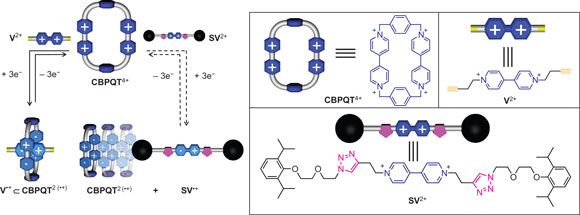
Radically enhanced molecular recognition
Radically enhanced molecular recognition
The tendency for viologen radical cations to dimerize has been harnessed to establish a recognition motif based on their ability to form extremely strong inclusion complexes with cyclobis(paraquat-p-phenylene) in its diradical dicationic redox state. This previously unreported complex involving three bipyridinium cation radicals increases the versatility of host–guest chemistry, extending its practice beyond the traditional reliance on neutral and charged guests and hosts. In particular, transporting the concept of radical dimerization into the field of mechanically interlocked molecules introduces a higher level of control within molecular switches and machines. Herein, we report that bistable and tristable [2]rotaxanes can be switched by altering electrochemical potentials. In a tristable [2]rotaxane composed of a cyclobis(paraquat-p-phenylene) ring and a dumbbell with tetrathiafulvalene, dioxynaphthalene and bipyridinium recognition sites, the position of the ring can be switched. On oxidation, it moves from the tetrathiafulvalene to the dioxynaphthalene, and on reduction, to the bipyridinium radical cation, provided the ring is also reduced simultaneously to the diradical dication.
2009
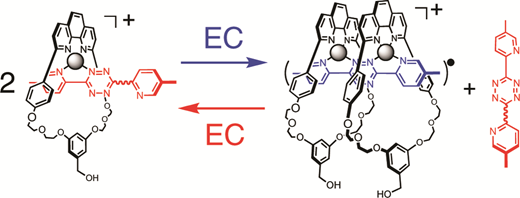
Reduction of a Redox-Active Ligand Drives Switching in a Cu(I) Pseudorotaxane by a Bimolecular Mechanism
Reduction of a Redox-Active Ligand Drives Switching in a Cu(I) Pseudorotaxane by a Bimolecular Mechanism
The reduction of a redox-active ligand is shown to drive reversible switching of a Cu(I) [2]pseudorotaxane ([2]PR+) into the reduced [3]pseudorotaxane ([3]PR+) by a bimolecular mechanism. The unreduced pseudorotaxanes [2]PR+ and [3]PR2+ are initially self-assembled from the binucleating ligand, 3,6-bis(5-methyl-2-pyridine)-1,2,4,5-tetrazine (Me2BPTZ), and a preformed copper-macrocycle moiety (Cu-M+) based on 1,10-phenanthroline. X-ray crystallography revealed a syn geometry of the [3]PR2+. The UV−vis−NIR spectra show low-energy metal-to-ligand charge-transfer transitions that red shift from 808 nm for [2]PR+ to 1088 nm for [3]PR2+. Quantitative analysis of the UV−vis−NIR titration shows the stepwise formation constants to be K1 = 8.9 × 10⁸ M−1 and K2 = 3.1 × 10⁶ M−1, indicative of negative cooperativity. The cyclic voltammetry (CV) and coulometry of Me2BPTZ, [2]PR+, and [3]PR2+ shows the one-electron reductions at E1/2 = −0.96, −0.65, and −0.285 V, respectively, to be stabilized in a stepwise manner by each Cu+ ion. CVs of [2]PR+ show changes with scan rate consistent with an EC mechanism of supramolecular disproportionation after reduction: [2]PR0 + [2]PR+ = [3]PR+ + Me2BPTZ0 (KD*, kd). UV−vis−NIR spectroelectrochemistry was used to confirm the 1:1 product stoichiometry for [3]PR+:Me2BPTZ. The driving force (ΔGD* = −5.1 kcal mol−1) for the reaction is based on the enhanced stability of the reduced [3]PR+ over reduced [2]PR0 by 365 mV (8.4 kcal mol−1). Digital simulations of the CVs are consistent with a bimolecular pathway (kd = 12 000 s−1 M−1). Confirmation of the mechanism provides a basis to extend this new switching modality to molecular machines.